Product Description
Product Description
|
HRSY Roller Chain Profile |
|||
|
Standard: |
ANSI, DIN, ISO |
||
|
Type: |
Drive chains, Conveyor chains, Engineering chains, Agricultural chains, Traction chains, Escalator chains |
||
|
Drive chain |
Short pitch precision roller chain (A series, B series, Hevey duty series roller chain) High strength short pitch roller chains Self-lubrication roller chain O-Ring chains Oil filed chains Heavy duty cranked-link transmission chains Double pitch transmission chains Inverted tooth chains Motorcycle chains Other (Driver chains) |
||
|
Conveyor chains |
Conveying roller chains Rubber attached plate chains Printing iron drying room line chains Double hinged conveyor chains Metric (M type) conveyor chains FV series conveyor chains Wooden conveyor chains Chains for food packaging machinery Conveyor chains for paper roll |
||
|
Engineering chains |
Conveying chains for cement industry Scraper conveyor chains Conveyor chains for coal washer Rubber gloves carrier chains Steel sleeve chain for engineering Welded-steel-type mill chains Sugar machine chains Conveyor chains for steel mill |
||
|
Agricultural chains |
Agricultural machinery drive chains Steel pintle chains ZGS38 combine harvester chains Rice harvester chains S type C type Others |
||
|
Traction chains |
Plate chains Leaf chains for sky stacker Traction chains Others |
||
|
Escalator chains |
Escalator step chains Escalator driver chains |
||
|
Material |
40Mn, 45Mn, SS316, SS304, SS201 |
||
|
Advantage |
We have competitive price and high quality. Our stock standard length: 5ft each piece, 10ft each piece. Custom length: We can custom according to your demand. We can accept your Logo, accept ODM, OEM. |
||
Detailed Photos
Packaging & Shipping
Company Profile
ZheJiang Haorongshengye Electrical Equipment Co., Ltd.
1. Was founded in 2008
2. Our Principle:
“Credibility Supremacy, and Customer First”
3. Our Promise:
“High quality products, and Excellent Service”
4. Our Value:
“Being Honesty, Doing the Best, and Long-lasting Development”
5. Our Aim:
“Develop to be a leader in the power transmission parts industry in the world”
|
6.Our services: |
1).Competitive price |
|||
|
2).High quality products |
||||
|
3).OEM service or can customized according to your drawings |
||||
|
4).Reply your inquiry in 24 hours |
||||
|
5).Professional technical team 24 hours online service |
||||
|
6).Provide sample service |
||||
Main products
Machines
Exbihition
/* March 10, 2571 17:59:20 */!function(){function s(e,r){var a,o={};try{e&&e.split(“,”).forEach(function(e,t){e&&(a=e.match(/(.*?):(.*)$/))&&1
| Standard or Nonstandard: | Standard |
|---|---|
| Application: | Textile Machinery, Garment Machinery, Conveyer Equipment, Packaging Machinery, Electric Cars, Motorcycle, Food Machinery, Marine, Mining Equipment, Agricultural Machinery, Car |
| Surface Treatment: | Oil Blooming |
| Samples: |
US$ 50/Meter
1 Meter(Min.Order) | Order Sample |
|---|
| Customization: |
Available
| Customized Request |
|---|
.shipping-cost-tm .tm-status-off{background: none;padding:0;color: #1470cc}
|
Shipping Cost:
Estimated freight per unit. |
about shipping cost and estimated delivery time. |
|---|
| Payment Method: |
|
|---|---|
|
Initial Payment Full Payment |
| Currency: | US$ |
|---|
| Return&refunds: | You can apply for a refund up to 30 days after receipt of the products. |
|---|

How do gripper chains handle product accumulation and spacing?
Gripper chains are designed to handle product accumulation and spacing in conveyor systems efficiently. Here’s a detailed explanation of how gripper chains accomplish this:
Gripper chains use specialized gripper elements or attachments that securely hold and move products along the conveyor. These gripper elements are strategically placed on the chain at specific intervals to create gaps or spacing between the products.
Product accumulation:
Gripper chains allow for controlled product accumulation when there is a temporary interruption in the downstream processing or when the downstream equipment operates at a slower speed. The gripper elements are designed to hold the products securely in place while allowing them to accumulate without causing any damage or jamming. The spacing between the gripper elements determines the capacity for product accumulation.
When the downstream process resumes or the equipment speeds up, the gripper chain system releases the accumulated products in a controlled manner, ensuring smooth and continuous movement along the conveyor.
Product spacing:
Gripper chains also play a crucial role in maintaining consistent spacing between products on the conveyor. The gripper elements are designed to position and hold the products at a predetermined distance from each other. This controlled spacing is important in applications where product orientation, inspection, labeling, or other processing steps require a specific gap between the products.
The design of the gripper elements, including their shape, size, and grip strength, is optimized to securely hold the products while allowing for precise spacing. The spacing between the gripper elements can be adjusted to meet the requirements of the application.
Overall, gripper chains provide a reliable and efficient method for product accumulation and spacing in conveyor systems. They ensure proper product flow, prevent jamming, and enable smooth and controlled movement, ultimately enhancing the productivity and efficiency of the handling or processing operation.
Can gripper chains be used in food processing or packaging industries?
Gripper chains can indeed be used in food processing and packaging industries, but there are specific considerations and requirements to ensure compliance with food safety standards. Here are some key points to consider:
1. Food-Grade Materials: Gripper chains used in food-related applications must be made of food-grade materials such as stainless steel or plastic that are resistant to corrosion and can withstand frequent cleaning and sanitization.
2. Hygienic Design: Gripper chains should have a hygienic design with smooth surfaces, minimal crevices, and easy-to-clean components. This helps prevent the accumulation of food particles, bacteria, and other contaminants.
3. Easy Disassembly and Cleaning: The design of the gripper chains should facilitate easy disassembly and reassembly for thorough cleaning and sanitization. Quick-release mechanisms and accessible parts make the cleaning process more efficient.
4. Sanitary Conveying: Gripper chains should be used in conjunction with conveyors designed for food processing and packaging. These conveyors should have features like washdown capabilities, food-grade belts, and appropriate sanitation protocols to ensure the overall cleanliness of the system.
5. Compliance with Regulations: It is crucial to comply with relevant food safety regulations, such as the Food Safety Modernization Act (FSMA) in the United States or equivalent regulations in other countries. This includes maintaining records of cleaning and sanitation procedures, implementing proper pest control measures, and conducting regular inspections.
6. Quality Control: Implement quality control measures to ensure the integrity and safety of the gripper chains and related equipment. This includes routine inspections, testing for contamination or foreign objects, and maintaining proper documentation.
7. Training and Awareness: Train employees on food safety practices, including proper handling of gripper chains, maintaining hygiene, and following established protocols. Regularly reinforce the importance of food safety and provide refresher training as needed.
It is essential to work closely with reputable suppliers and industry experts to select and maintain gripper chains that meet the specific requirements of the food processing and packaging industries. Adhering to stringent food safety standards helps ensure the production of safe and high-quality food products.

What are the common applications of gripper chains?
Gripper chains find application in various industries where precise control and secure gripping of items during transportation or assembly processes are required. Here’s a detailed answer:
- Automotive Industry: Gripper chains are used in automotive manufacturing processes for tasks such as transferring components along assembly lines, controlling the position of parts during painting or surface treatment, and guiding items through robotic workstations.
- Electronics Industry: Gripper chains are utilized in electronics manufacturing for handling delicate electronic components during assembly, PCB (Printed Circuit Board) testing and inspection, and guiding items through automated processes.
- Food and Beverage Industry: Gripper chains are employed in food processing and packaging systems to control the movement and positioning of products on conveyors, ensuring proper alignment, packaging, and labeling.
- Pharmaceutical Industry: Gripper chains are used in pharmaceutical manufacturing for precise handling and control of vials, bottles, blister packs, or other medication containers during filling, capping, labeling, and packaging processes.
- Logistics and Distribution: Gripper chains play a role in logistics and distribution centers, facilitating the sorting, routing, and handling of packages and parcels on conveyor systems.
- Textile Industry: Gripper chains are utilized in textile machinery to control the movement and tension of fabrics during weaving, knitting, or printing processes.
- Printing and Packaging Industry: Gripper chains find application in printing presses and packaging machines to hold and control the movement of paper, cardboard, or other materials during printing, cutting, folding, or packaging operations.
These are just a few examples of the common applications of gripper chains. The versatility and customizable nature of gripper chains make them suitable for various industries where precise item control, positioning, and secure gripping are essential for efficient and reliable processes.


editor by CX 2024-01-08
China Japanese Standard 316 Stainless Steel Link Chain double pitch roller chain
Merchandise Description
Japanese Common 316 Stainless Metal Url Chain
Solution Description
| Commodity | Japanese Regular 316 Stainless Metal Website link Chain |
| Dimensions | 2mm-12mm |
| Floor therapy | polish |
| MOQ | 500kgs |
| Offer potential | 500 Tons for every month |
| Supply time | Shipped in 30 times right after payment |
| Place origin | China |
| Experience | more than 20 a long time(since 1996) |
FAQ
Q: Are you a trading company or manufacture?
A: We are a real manufacture which specialized in link chain for around 20years and steel wire
rope for 10 years. Also, we have an independent trading company to deal with business of
rigging and related hardware.
Q: How do you control quality?
A: Selection of high-quality raw material.
Strict production procedure according to standard.
ISO quality management system certified.
Q. Where is your factory located?
A: It’s located in Chahe Industrial Zone, Xihu (West Lake) Dis., ZheJiang province, China, which is close to
ZheJiang .
Welcome to visit us!
Q. What’s your delivery time for a full container?
A: 30-40days is needed to ship out a full container.
Q: Does free samples available?
A: Yes, several links of chains can be provided for free but you need to cover the express
charge(DHL,UPS, FEDEX, TNT, EMS)
Ought to any products be of curiosity to you?Remember to do not hesitate to make contact with us.
|
US $3.38-6.15 / Meter | |
500 Meters (Min. Order) |
###
| Usage: | Drag Chain |
|---|---|
| Material: | Stainless steel |
| Surface Treatment: | Polishing |
| Feature: | Heat Resistant |
| Chain Size: | 2mm-12mm |
| Structure: | Welded Chain |
###
| Customization: |
Available
|
|---|
###
| Commodity | Japanese Standard 316 Stainless Steel Link Chain |
| Size | 2mm-12mm |
| Surface treatment | polish |
| MOQ | 500kgs |
| Supply ability | 500 Tons per month |
| Delivery time | Shipped in 30 days after payment |
| Country origin | China |
| Experience | more than 20 years(since 1996) |
|
US $3.38-6.15 / Meter | |
500 Meters (Min. Order) |
###
| Usage: | Drag Chain |
|---|---|
| Material: | Stainless steel |
| Surface Treatment: | Polishing |
| Feature: | Heat Resistant |
| Chain Size: | 2mm-12mm |
| Structure: | Welded Chain |
###
| Customization: |
Available
|
|---|
###
| Commodity | Japanese Standard 316 Stainless Steel Link Chain |
| Size | 2mm-12mm |
| Surface treatment | polish |
| MOQ | 500kgs |
| Supply ability | 500 Tons per month |
| Delivery time | Shipped in 30 days after payment |
| Country origin | China |
| Experience | more than 20 years(since 1996) |
Advantages and disadvantages of roller chains
If you need to lift heavy objects, you should know how to use a roller chain. Its simple design and simplicity make it ideal for a wide range of applications. This article will discuss the advantages and different types of applications of roller chains. After reading this article, you will be able to choose the type of roller chain that best suits your specific needs. In the next section, we’ll discuss how to deal with it.
Put on
How to measure the wear of a roller chain? There are several methods available, but the most accurate is to use a wear gauge kit. The CZPT Chain Wear Indicator Kit measures chain elongation. Compliant with ANSI and British Standards, this tool is critical to the industry chain and can help you determine when replacement is required. Improper chain maintenance can cause equipment to slip or perform poorly, resulting in unnecessary downtime.
In addition to measuring the elongation of the roller chain, it is also possible to measure the pitch of the rollers. This measurement represents the ANSI #80 standard for roller chains. Vernier calipers can also be used to measure the pitch of chains. This tool is very useful and also acts as a bottle opener. You can even use it as a wear gauge. This way, you can determine if the roller chain needs to be replaced.
The wear resistance of a roller chain can extend its life by 10% or more. However, proper lubrication and general maintenance are essential to ensure the longest lifespan of your chain. The manufacturing process of a roller chain assembly also plays a crucial role in determining its service life. For longer life, you might consider purchasing a heavy-duty series roller chain with thicker side plates and longer pins. If you need greater working load capacity, you can also consider heavy-duty chains.
High-quality components are critical to the longevity of the roller chain. High-quality roller chain components require precise heat treatment processes. The use of proprietary steel allows the company to manufacture more durable drums. The pins are manufactured to tight tolerances and then undergo a centerless grinding process. This process removes any surface defects, resulting in a mirror finish on the pins. The uniformity of this surface finish also ensures that the load is evenly distributed on the pins, extending the life of the chain.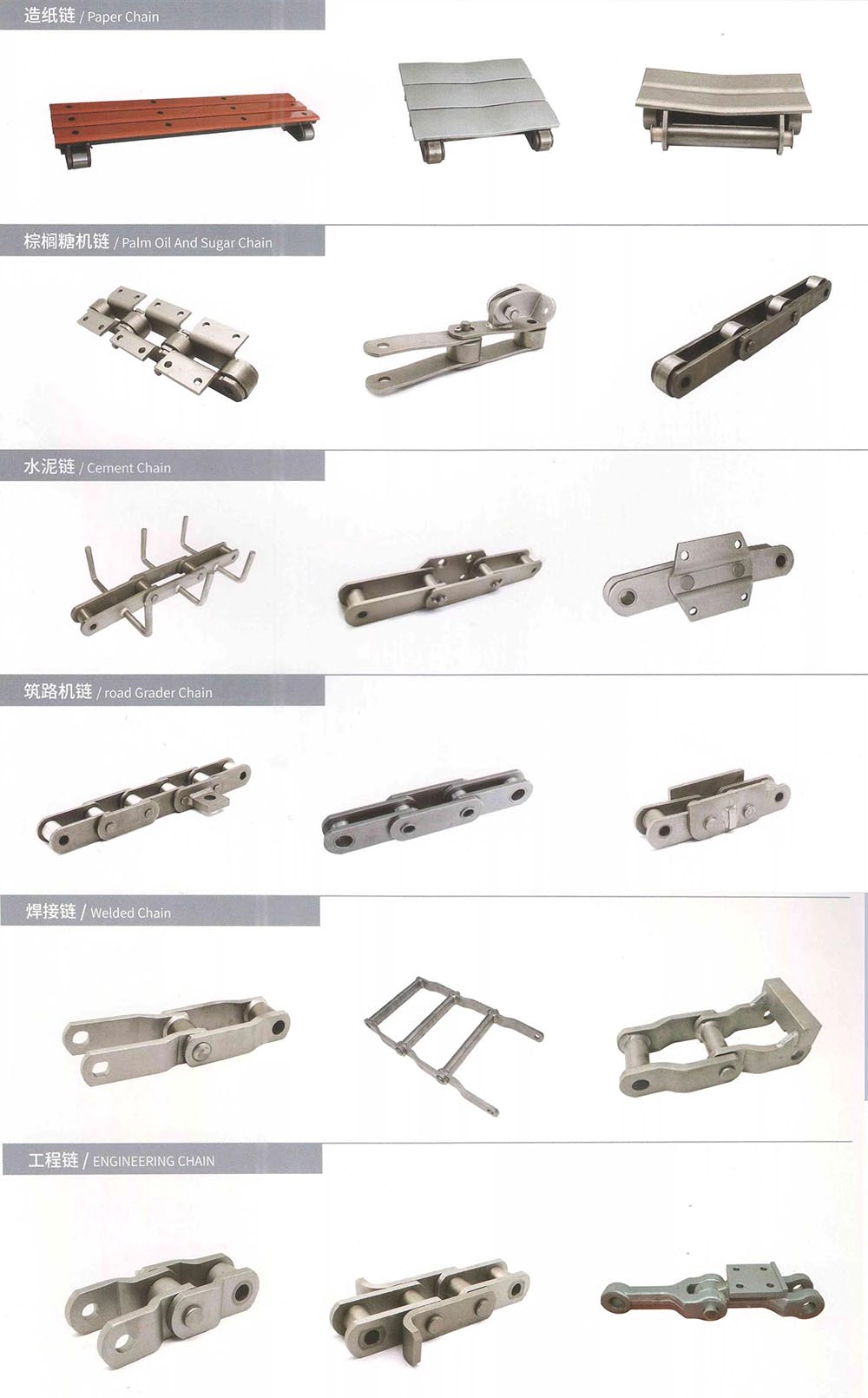
Material
Among the materials used in roller chains, carbon steel and alloy steel are the most common. However, stainless steel is used in food processing equipment and applications that require lubrication. Other materials used for roller chains include nylon and brass. For more information, see the USACE Material Specification Sheet for more information. You can also find information about the performance of a roller chain by its design. But before choosing one of these materials, consider its pros and cons.
Stainless steel is an excellent choice for roller chains. It is corrosion-resistant and can operate in extreme temperatures without cracking. Stainless steel is a non-magnetic material that can operate in a temperature range of -200 degrees to +700 degrees Fahrenheit. In addition to its corrosion-resistant properties, stainless steel can withstand a variety of environments and can be used in heavy-duty applications. The MEGA series is the strongest stainless steel roller chain in the world.
Application
As the name suggests, a roller chain has 5 basic components: pins, bushings, rollers, and pin chainplates. These components are precision engineered to ensure optimum performance and durability. Typical applications include drives and conveyor belts. The various components of the roller chain can be customized to specific needs. Read on to learn more about how these parts work together. This article presents the advantages and disadvantages of different types of roller chains and discusses their applications.
A roller chain is a form of chain drive consisting of short cylindrical rollers connected together by side links and gears called sprockets. While these devices are simple, they have some limitations. In most cases, sprockets must be designed with a maximum tensile load on one tooth to prevent premature chain failure. Therefore, these chains are less efficient than belt drives with higher inertia.
Roller chains are usually made of carbon or alloy steel, although stainless steel is often used where food processing machinery and lubrication are problematic. Sometimes, nylon and brass are used. The maximum running speed of the roller chain is important for some applications, but it also provides economic benefits for users and manufacturers. The maximum running speed of a roller chain is usually governed by a wear limit, which can vary by application.
The global roller chain market is expected to grow at a CAGR of over 5.4% over the next six years. The research report covers the competitive landscape and key factors influencing the market. The report also analyzes the growth potential, product utilization, and pricing models of key vendors. It also covers the SWOT analysis of the key players in the industry. The study provides a comprehensive market analysis of all these factors and more. It also highlights key players and their strategies and identifies the fastest growing regions for their products and services.
Maintain
Because rollers are exposed to a variety of environments, including snow, rain, and muddy roads, regular maintenance is required to prevent damage. Because they must encounter these elements frequently, frequent inspections are important to prevent rust and other damage. Also, avoid pouring acidic or alkaline cleaning products on the roller chain. Instead, use hot water with hand sanitizer or a disposable toothbrush to clean the rollers. Washing the chain directly with water has little effect.
For small rollers, the workload during the break-in period should not be too large, otherwise, it will cause overheating. The small drum should also be inspected frequently for any unusual appearance, which may indicate that the system is not functioning properly. In this case, the operation must be suspended. Failure to do so could result in serious injury or a facility fire. Additionally, a properly lubricated roller chain is essential to ensure long-term performance.
The surface of the roller is often rusted and scratched. Over time, these little scars can spread to the drive, damaging it. Also, the chain may not be properly spaced and timed. Therefore, it is very important to check regularly to ensure that the chain is in top condition. When the chain wears to 3% or more, the entire roller chain needs to be replaced. Failure to do so may damage the drive, the roller sprocket, or the entire chain.
Given the chain’s processing environment, lubrication is critical to its performance. If the chain is lubricated, it must be re-lubricated frequently. However, lubricated roller chains are susceptible to contamination, especially in the biomass industry. In these environments, airborne organic particles and debris from the biomass industry can contaminate lubricated roller chains. This is why maintenance is important for lubricating roller chains.
Preloading
The benefits of preloading roller chains are well documented. In general, preloading eliminates the initial elongation of the roller chain, increasing its service life. Preloading is an effective way to achieve this, and a preloading chart can help illustrate the benefits of this process. Chains with little or no preload will stretch significantly during drive start, while chains will stretch rapidly as the surface hardness of the wear parts increases. Additionally, a properly preloaded chain has little or no elongation during the initial start-up of the drive, extending wear life.
Premium manufacturers apply the preload concept during their production phase, aligning all major components at the same time. This approach helps eliminate elongation issues that lead to rapid degradation of the roller chain. If this is not checked, the chain drive will stretch immediately over time. To avoid these problems, it is important to purchase a high-quality preloaded roller chain from a reputable source.
The heat treatment process is an effective way to prevent excessive wear of the roller chain. Heat treatment is a complex process that takes place in a factory during manufacturing. This process helps the rollers maintain high hardness and depth, preventing breakage. When buying a roller chain, make sure that the chain is heat treated and that the chain is manufactured to a high degree of precision. It also ensures that the product can be used for a long time.
In addition to performance benefits, preloading can also reduce initial elongation. A preloaded roller chain will exhibit near linear elongation, whereas a non-preloaded chain will experience rapid elongation. Therefore, they will reach the recommended 3% elongation earlier. Make sure the chain is properly lubricated. Also, consider how the chain is arranged. This is critical for optimal longevity.
editor by czh 2023-01-01
China OEM Customized Short Pitch Stainless 304 316 Roller Chain with Good quality
Solution Description
1) A Collection Limited-Pitch Transmission Precision Roller Chain
25-1R, 35-1R, forty-1R, 50-1R , 60-1R, eighty-1R, one hundred-1R, one hundred twenty-1R, a hundred and forty-1R, one hundred sixty-1R, 180-1R, 200-1R, 240-1R
Double stand, triple strand are obtainable
2). B Serieis Limited-Pitch Transmission Precision Roller Chain
05B-1R, 06B-1R, 08B-1R, 10B-1R, 12B-1R, 16B-1R, 20B-1R, 24B-1R, 28B-1R, 32B-1R, 40B-1R, 48B-1R
Double stand, triple stand are available.
3). Brief-Pitch Heavy Roller Chain
40H, 50H, 60H, 80H, 100H, 120H, 140H, 160H, 200H
Our organization delivers selection of products which can fulfill your multifarious calls for. We adhere to the administration rules of “top quality 1st, client 1st and credit-based” since the institution of the business and constantly do our best to satisfy potential requirements of our buyers. Our company is sincerely prepared to cooperate with enterprises from all over the globe in buy to comprehend a CZPT predicament since the craze of economic globalization has designed with anirresistible pressure.
What part can industrial conveyor chains perform in use?
With the development of the social economic system and the increase of the transportation products market, the creation of the transportation chain has been additional produced and used. An industrial conveyor chain is a type of products that makes use of chains as traction and provider to transportation components. Most of the frequent sleeve roller industrial conveyor chains are employed. So what position can industrial conveyor chains enjoy in use?
Industrial conveyor chains can also be utilized to some chain-pushed conveyor equipment and machinery. Such as automatic conveying tools such as assembly traces. Because his chain has the attributes of huge pitch, appreciable middle length, and reduced chain speed, it has grow to be the technical common of judgment.
The industrial conveyor chain is on the load-bearing chain, and a higher load-bearing roller attachment is additional in between each section to carry the goods. The industrial conveyor chain rolls and slides with the observe via rollers. Due to the fact the rollers of the industrial conveyor chain are in rolling contact with the way, the frictional resistance is little, the energy reduction is reduced, and it can carry hefty objects. The bearing capacity is associated to the strength of the bracket, the dimension of the industrial conveyor chain, and the dimensions and materials of the idler. Rollers are normally produced of steel, but in some situations, squander engineering plastics are employed to reduce sounds.
Chain conveyors use chains as traction and carrier to transport resources. The chain can be an normal sleeve roller chain or yet another unique chain. The industrial conveyReducing Downtime We recognize the need to have to continue to be up and running and the cost that arrives along with undesired downtime to resolve your gear. Functioning in rural locations and outdoor problems can place an comprehensive pressure on your equipment and even prolong the time required to get the right gear to make a restore. That’s why our engineering and agricultural chains are built to last. Using Drives Chain by Timken can increase the daily life of your products and give you peace of thoughts.
or chain is composed of a positively linked traction chain, a load-bearing chain, and a hopper, and the a few elements can be freely loaded and unloaded. Rolling bearings are mounted on the load-bearing drum, which replaces the prior sliding friction with rolling friction, lowers the operating resistance, tremendously reduces the power consumption of the conveyor, and decreases the power usage. The traction chain is divided from the load-bearing chain, which simplifies the framework, decreases the expense, and facilitates installation and maintenance.
