Product Description
ISO/ANSI/DIN Standard Short Pitch Precision Stainless Steel Hardware Transmission Motorcycle Industrial Roller Chain
Product Description
1. Material: Stainless Steel 304 & 316 / Alloy Carbon Steel
2. Surface Treatment: Shot peening / Zinc-plated / Nickel-plated / Dacromet-plated
3. Chain No:
35SS-1, 40SS-1, 50SS-1, 60SS-1, 80SS-1, 100SS-1, 120SS-1, 140SS-1;
35SS-2, 40SS-2, 50SS-2, 60SS-2, 80SS-2, 100SS-2, 120SS-2, 140SS-2;
35SS-3, 40SS-3, 50SS-3, 60SS-3, 80SS-3, 100SS-3, 120SS-3, 140SS-3;
4. Application: Stainless Steel Chains are used in so many industries, such as machine manufacturing, food machine, etc. Also are suitable for high and low temperature conditions.
5. Characteristic:
1. The chain can be used on the both sides of multi-axle transmission.
2. Easy installation and replacement.
3. It can obtain larger reduction ratio.
4. The roller chain has good elasticity, high strength and each hinge part has lubricating oil, so it can be stored easliy. Thus, compared with the rigid contact tooth, it has good cushioning and vibration absorbing ability.
| Product name | Stainless Steel Roller Chain From China |
| Materials Available | 1. Stainless Steel: SS304, SS316, etc |
| 2. Alloy Steel: 45Mn, 42CrMo, 20CrMo, etc | |
| 3. OEM according to your request | |
| Surface Treatment | Shot peening, Blackening, Oxygenation, Polishing, Zinc-plated, Nickel-plated, Anodized, etc. |
| Characteristic | Fire Resistant, Oil Resistant, Heat Resistant |
| Design criterion | ISO DIN ANSI & Customer’s Drawing |
| Size | Customer’s Drawing & ISO standard |
| Package | Wooden Case / Container and pallet, or made-to-order |
| Certificate | ISO9001: 2008 |
| Advantage | First quality, Best service, Competitive price, Fast delivery |
| Delivery Time | 20 days for samples. 45 days for official order. |
Detailed Photos
View more products,please click here…
Company Profile
| Usage: | Transmission Chain |
|---|---|
| Material: | Stainless steel |
| Structure: | Roller Chain |
| 80-1: | 1" |
| Size: | 50ss-1 |
| Other: | Corrosion Resistance |
| Samples: |
US$ 0/Meter
1 Meter(Min.Order) | |
|---|
| Customization: |
Available
| Customized Request |
|---|

Can gripper chains be used in abrasive or harsh environments?
Gripper chains are designed to be durable and resistant to various operating conditions, including abrasive or harsh environments. While the specific suitability depends on the materials and coatings used in the gripper chain construction, there are several features that enable gripper chains to handle such conditions:
- Material Selection: Gripper chains can be manufactured using materials that offer high resistance to abrasion and corrosion. Common materials include stainless steel, hardened steel, or plastic compounds with excellent wear resistance.
- Coatings and Surface Treatments: Applying specialized coatings or surface treatments to the gripper chain can enhance its resistance to abrasion and corrosion. For example, coatings like zinc plating or nickel plating provide an additional layer of protection against harsh environments.
- Sealed Design: Gripper chains can incorporate sealed or self-lubricating mechanisms to prevent the ingress of abrasive particles or contaminants. This helps to maintain smooth operation and prolong the chain’s lifespan in harsh environments.
- Robust Construction: Gripper chains are typically designed with robust construction to withstand the rigors of abrasive environments. This includes reinforced links, sturdy attachments, and secure fastening methods to ensure reliable operation even under challenging conditions.
- Regular Maintenance: To ensure optimal performance and longevity in abrasive environments, regular maintenance is essential. This may involve periodic cleaning, lubrication, and inspection of the gripper chain system to remove accumulated debris and identify any signs of wear or damage.
While gripper chains can handle abrasive or harsh environments, it is crucial to select the appropriate materials, coatings, and maintenance practices based on the specific conditions of the application. Consulting with industry experts or manufacturers can provide further guidance in choosing the most suitable gripper chain for abrasive environments.

What are the maintenance requirements for gripper chains?
Maintaining gripper chains is essential to ensure their optimal performance and longevity. Here’s a detailed explanation of the maintenance requirements:
1. Regular Cleaning: Gripper chains should be cleaned regularly to remove any debris, dirt, or accumulated residues that can affect their operation. Use a mild detergent or cleaning solution and a brush to clean the chain links, gripper fingers, and jaws. Rinse thoroughly and dry before reinstallation.
2. Inspect for Wear and Damage: Regularly inspect the gripper chains for signs of wear, damage, or deformation. Check for any broken or worn gripper fingers, damaged chain links, or misalignment. Replace any worn or damaged components promptly to prevent further issues.
3. Lubrication: Proper lubrication is essential for smooth operation and reduced friction. Apply lubricant to the chain links and gripper fingers/jaws according to the manufacturer’s recommendations. Use a lubricant specifically designed for high-load and conveyor applications.
4. Tension Adjustment: Check the tension of the gripper chains regularly. Ensure that they are properly tensioned to prevent excessive slack or over-tightening, which can affect the gripping performance and lifespan of the chains. Adjust the tension as needed according to the manufacturer’s guidelines.
5. Replace Worn Components: As gripper chains are subjected to wear during operation, it’s important to monitor the condition of the gripper fingers, jaws, and chain links. Replace any worn or damaged components promptly to maintain the chain’s performance and grip strength.
6. Monitor Alignment: Check the alignment of the gripper chains to ensure they are properly aligned with the sprockets. Misalignment can cause premature wear and reduce the effectiveness of the gripping action. Adjust the alignment as necessary.
7. Operational Environment: Consider the operating environment and take appropriate measures to protect the gripper chains from excessive moisture, extreme temperatures, or exposure to corrosive substances. Implement proper guarding and regular inspections to prevent foreign objects from entering the chain assembly.
8. Follow Manufacturer’s Guidelines: Always refer to the manufacturer’s guidelines and recommendations for specific maintenance procedures, lubrication intervals, and any special considerations for the gripper chains in your particular application.
By following these maintenance requirements, you can ensure that your gripper chains remain in optimal condition, providing reliable gripping performance and prolonging their lifespan.

What is a gripper chain and how is it used?
A gripper chain, also known as a grip chain or gripper conveyor chain, is a type of roller chain designed specifically for gripping and transporting items in a controlled manner. It is commonly used in various material handling and conveyor systems. Here’s a detailed answer to the question:
A gripper chain consists of a series of interconnected links, typically made of steel, that have special gripper attachments or fingers. These gripper attachments are strategically positioned along the chain and are designed to securely hold items during transportation.
The gripper attachments on the chain can take different forms depending on the application requirements. They may have curved or flat surfaces, hooks, or other specialized shapes to accommodate the specific shape and size of the items being handled. The gripper attachments are typically made of durable materials such as plastic or metal to ensure reliable gripping and longevity.
Gripper chains are used in various industries and applications where precise control and secure transportation of items are necessary. Some common uses include:
- Material Handling: Gripper chains are utilized in material handling systems to transport items such as bags, boxes, trays, or components between different stages of production or processing. The gripper attachments securely grip the items, preventing slippage or damage during movement.
- Packaging: Gripper chains are often employed in packaging machinery to control the movement of products through the packaging process. They ensure precise positioning and orientation of items, allowing for accurate packaging and labeling.
- Assembly Lines: Gripper chains facilitate the assembly process by carrying and positioning components or parts at various workstations. They enable the controlled transfer of items, ensuring the smooth flow of production and minimizing the risk of errors.
- Conveyor Systems: Gripper chains are used in conveyor systems where items need to be conveyed at specific intervals or in a synchronized manner. The gripper attachments engage with the items, holding them securely as they are transported along the conveyor.
Gripper chains offer several advantages in these applications. They provide a reliable and efficient method for gripping and transporting items, ensuring precise control and minimizing the risk of slippage or mishandling. The design of gripper chains allows for customization to suit specific application requirements, including the size, shape, and weight of the items being transported.
It’s important to select the appropriate gripper chain based on factors such as load capacity, speed requirements, and environmental conditions. Regular inspection and maintenance, including lubrication and tension adjustment, help ensure optimal performance and extend the lifespan of the gripper chain in the intended application.


editor by CX 2023-09-11
China OEM Short Pitch Precision stainless steel hardware Transmission Motorcycle Industrial Roller Chain
Product Description
Short Pitch Precision Roller Chains
A. Our Services:
1. Any of your kind inquiry about chain would be replied within 24 hours.
2. Well-trained and experienced sales staffs will reply all your concerns in fluent English.
3. OEM services are available with us, our professional designer would make your private idea into being.
4. Protection of your sales area, ideas of design and all your private information.
5. Delivery by air mail or ship for your orders.
6. With years of manufacture and promotion experience in global market, brings you profit and great success!
B.Product Description:
| Style: | Simplex Roller Chains, Duplex Roller Chains, Triplex Roller Chains, Multiple Roller Chains |
| Chain No.: (ANSI/ISO) | 03C, 04C, 06C, 08A, 10A, 12A-~ 48A |
| Chain No.: ( ANSI ) | 15, 25,35,41,40,50 ~ 240 |
| Pitch: | 4.7625 mm ~ 76.200 mm |
C.Company show & Product Process
D. Packaging & Certificate
| Packaging Details: | Chain+Plastic Bag+Neutral Box+Wooden case+Big Carton+Steel Pallets |
| Delivery Detail: | five weeks |
E. FAQ:
1. Are you manufacturer or trade Company?
We are a factory founded in 1991 with trade team for international service.
2. What terms of payment you usually use?
T/T 30% deposit and 70% against document, Western Union, L/C at sight
3. what is your lead time for your goods?
Normally 45 days after confirmed order. 30 days could be available in low season for some items (during May to July), and 65 days during new year and hot season ( Jan to March).
4. Do you attend any Show?
We attend Hannover show in Germany, NMW in Austrilia, Canton fair, PTC, in China and many other special furniture shows.
5. Do you have any instant chat ?
| Usage: | Conveyor Chain |
|---|---|
| Material: | Alloy/Carbon Steel |
| Surface Treatment: | Electroplating |
| Feature: | Heat Resistant |
| Chain Size: | 1/2"*11/128" |
| Structure: | Roller Chain |
| Customization: |
Available
| Customized Request |
|---|

What are the key components of a gripper chain system?
A gripper chain system consists of several key components that work together to facilitate the gripping and conveying of items. These components include:
- Gripper Chain: The gripper chain itself is the central component of the system. It is a continuous loop of interconnected links, typically made of metal or plastic. The chain features integrated grippers or attachments that securely hold and transport items during the conveying process.
- Gripper Attachments: Gripper attachments are the specialized components attached to the chain at regular intervals. They come in various shapes and designs, depending on the application requirements. Gripper attachments are responsible for gripping and releasing the items being conveyed.
- Drive System: The drive system consists of the motor, gearbox, and other power transmission components that provide the necessary driving force to move the gripper chain. It ensures smooth and controlled motion of the chain throughout the conveying process.
- Tensioning System: To maintain proper tension and prevent slack in the gripper chain, a tensioning system is used. It typically includes tensioning devices such as tensioners, idlers, or tensioning sprockets that help keep the chain taut and ensure reliable operation.
- Support Structure: The gripper chain system requires a support structure to hold and guide the chain along the desired conveying path. This structure may include guide rails, support brackets, and other components that provide stability and alignment for the chain.
- Control System: The control system includes sensors, actuators, and a programmable logic controller (PLC) or a computerized control unit. It regulates the speed, direction, and operation of the gripper chain system, allowing for precise control and coordination of the conveying process.
- Safety Features: Gripper chain systems often incorporate safety features to protect operators and prevent accidents. These features may include emergency stop buttons, safety interlocks, protective enclosures, and sensors to detect any abnormalities or hazards during operation.
By combining these key components, gripper chain systems provide efficient and reliable conveying of items in a wide range of industrial applications.

How do gripper chains handle side-to-side movement in conveying applications?
Gripper chains are designed to effectively handle side-to-side movement in conveying applications. Here’s how they handle this movement:
Gripper chains typically consist of a series of interconnected links with gripper attachments. These grippers securely hold the conveyed items, such as bottles, containers, or products, during the conveying process. The grippers are strategically positioned along the chain and can be customized to match the shape and size of the conveyed items.
When side-to-side movement is required in a conveying application, gripper chains can accommodate this through specific design features:
1. Gripper Attachment Design: Gripper chains are designed with gripper attachments that allow the items to move laterally while still maintaining a secure grip. The grippers are typically flexible or have some degree of movement to accommodate the side-to-side motion without compromising the grip on the conveyed items.
2. Chain Flexibility: Gripper chains are designed to have a certain level of flexibility, allowing them to adapt to the side-to-side movement of the conveyed items. This flexibility ensures that the grippers can adjust their position and maintain a reliable grip on the items during lateral motion.
3. Guide Rails and Track Systems: In some cases, guide rails or track systems are used in conjunction with gripper chains to guide the lateral movement of the conveyed items. These guide rails provide additional stability and control, ensuring smooth and precise side-to-side motion.
4. Tensioning Systems: Proper tensioning of the gripper chains is crucial to maintain consistent and reliable performance during side-to-side movement. Tensioning systems, such as tensioners or adjusters, are used to control the tension in the chain, ensuring optimal grip and minimizing slack that could affect the lateral movement.
By utilizing these design features, gripper chains can effectively handle side-to-side movement in conveying applications. They provide secure gripping and reliable transportation of items, even when lateral motion is required.

What are the common applications of gripper chains?
Gripper chains find application in various industries where precise control and secure gripping of items during transportation or assembly processes are required. Here’s a detailed answer:
- Automotive Industry: Gripper chains are used in automotive manufacturing processes for tasks such as transferring components along assembly lines, controlling the position of parts during painting or surface treatment, and guiding items through robotic workstations.
- Electronics Industry: Gripper chains are utilized in electronics manufacturing for handling delicate electronic components during assembly, PCB (Printed Circuit Board) testing and inspection, and guiding items through automated processes.
- Food and Beverage Industry: Gripper chains are employed in food processing and packaging systems to control the movement and positioning of products on conveyors, ensuring proper alignment, packaging, and labeling.
- Pharmaceutical Industry: Gripper chains are used in pharmaceutical manufacturing for precise handling and control of vials, bottles, blister packs, or other medication containers during filling, capping, labeling, and packaging processes.
- Logistics and Distribution: Gripper chains play a role in logistics and distribution centers, facilitating the sorting, routing, and handling of packages and parcels on conveyor systems.
- Textile Industry: Gripper chains are utilized in textile machinery to control the movement and tension of fabrics during weaving, knitting, or printing processes.
- Printing and Packaging Industry: Gripper chains find application in printing presses and packaging machines to hold and control the movement of paper, cardboard, or other materials during printing, cutting, folding, or packaging operations.
These are just a few examples of the common applications of gripper chains. The versatility and customizable nature of gripper chains make them suitable for various industries where precise item control, positioning, and secure gripping are essential for efficient and reliable processes.
editor by CX 2023-08-16
China Custom Conveyor Transmission Motorcycle Industrial Carbon Stee Roller Chain Short Pitch Precision Stainless Steel Hollow Pin
Product Description
Product Description
Series : ANSI SS 40 /SS 50 / SS 60 / SS 80 / SS 100 etc.
Materal : SS 304
Packing : 5M/PCS or 10 FT/PCS Or as your require.
Delivery time : around 35 wworking days.
Product Attribute
| Product name | Transmission Standard Roller Chain |
|
Surface Treatment |
Shot Peening ,Tempering Oiling ,Nickel-plated Grease, zince plated, Heat Treatment ,Stain proofing Carburizing ,Pre-stretched and anti-fatigue ,Quenching |
| Product application | Industry machine,Agriculture, mining, metallurgy, petrochemical industry, lifting and transportation and other industries |
| Product Series |
Series A, Series B, Heavy Duty |
| material |
Stainless steel and carbon steel |
| structure |
Simplex/Duplex/Triplex |
| Port |
Any sea port or airport in China |
| Brand | TV OEM |
| Payment |
L/C, T/T, D/P, Western Union |
| Package |
Chain, Plastic Bag, Color Box, Wooden Case. or OEM |
| A Series | 03C,04C-1,06C-1,085-1,08A-1,10A-1,12A-1,16A-1,20A-1,24A-1,28A-1,32A-1,36A-1,40A-1,48A-1.
15,25,35,41,40,50,60,80,100,120,140,160,180,200,240 |
| 04C-2,06C-2,085-2,08A-2,10A-2,12A-2,16A-2,20A-2,24A-2,28A-2,32A-2,36A-2,40A-2,48A-2.
25-2,35-2,41-2,40-2,50-2,60-2,80-2,100-2,120-2,140-2,160-2,180-2,200-2,240-2. |
|
| 04C-3,06C-3,085-3,08A-3,10A-3,12A-3,16A-3,20A-3,24A-3,28A-3,32A-3,36A-3,40A-3,48A-3.
25-3,35-3,41-3,40-3,50-3,60-3,80-3,100-3,120-3,140-3,160-3,180-3,200-3,240-3. |
|
| B Series | 05B-1,06B-1,08B-1,10B-1,12B-1,16B-1,20B-1,24B-1,28B-1,32B-1,40B-1,48B-1,56B-1,64B-1,72B-1. |
| 05B-2,06B-2,08B-2,10B-2,12B-2,16B-2,20B-2,24B-2,28B-2,32B-2,40B-2,48B-2,56B-2,64B-2,72B-2. |
|
| 05B-3,06B-3,08B-3,10B-3,12B-3,16B-3,20B-3,24B-3,28B-3,32B-3,40B-3,48B-3,56B-3,64B-3,72B-3. |
|
| Heavy Duty | 08AH-1,10AH-1,12AH-1,16AH-1,20AH-1,24AH-1,28AH-1,32AH-1,36AH-1,40AH-1,48AH-1
35H,40H,50H,60H,80H,100H,120H,140H,160H,180H,200H,240H |
| 12AH-2,16AH-2,20AH-2,24AH-2,28AH-2,32AH-2,40AH-2,
35H-2,40H-2,50H-2,60H-2,80H-2,100H-2,120H-2,140H-2,160H-2,180H-2,200H-2,240H-2. |
|
| 12AH-3,16AH-3,20AH-3,24AH-3,28AH-3,32AH-3,40AH-3
35H-3,40H-3,50H-3,60H-3,80H-3,100H-3,120H-3,140H-3,160H-3,180H-3,200H-3,240H-3. |
|
| Double pitch Series |
208A,208B,210A,210B,212A,212B,216A,216AH,216B,220A,220B,224A,224B,228B,232B
2040,2050,2060,2080,2080H,2100,2120 |
| We also carry out OEM according to your requirements | |
Product Parameters
Our Advantages
Company advantages:
Own Import & Export License, The TV trade mark registered successfully in many countries, Sales network spread all over China, Products export to 65 countries in 5 continents.
Membership:
1. The member of China General Machine Components Industry Association.
2. The member of China Chain Transmission Association.
3. The member of China Chain Standardization Association.
4. The member of China Agricultural Association Machinery Manufacturers.
With our excellent trained staffs and workers, advanced and efficient equipments, completely sales network, strict QA systems. You are confidence that our premium qualified chain can meet all customers’ specification and strictest quality standards.
WHY CHOOSE US
Comprehensive Product Portfolio We produce and supply a wide range of power transmission
products including drive chains, leaf chains, conveyor chains, agricultural chains, sprockets, and
couplings. This one-store-for-all shopping experience will significantly reduce your searching costs while
guarantee youfind what you want at 1 click.
Value Choice Products Our products are the best combination of quality and price, and you get what
you want within your budgets
Seasoned Sales Associates and Engineers We have 15 seasoned sales associates and 5 engineers;
on our team at your disposal any time when you need a helping hand. They are well trained with industry
know-now and will always respond to your requests within 24 hours.
100% Customer Retention Rate Our regular customers from overseas come back not just for our
premium quality products, but for the superior services that we’ve provided over the years.
FAQ
Q1: What’s your average lead time?
A: It varies. Our regular end-to-end lead time is 1-2 months.. We also provide express shipments for rush orders. For details,please consult our sales associate.
Q2: Is your price better than your competitors given the same quality?
A: Definitely YES. We provide the most competitive price in the power transmission industry. If price disparity exists, we’ll be more than happy to do a price match.
Q3: Can you make chains according to my CAD drawings?
A: Yes. Besides the regular standard chains, we produce non-standard and custom-design products to meet the specific technical requirements. In reality, a sizable portion of our production capacity is assigned to make non-standard products.
Q4: Can we inspect the goods before shipment?
A: Yes. You or your representative or any third-party inspection party assigned is allowed access to our facility and do the inspection.
Q5: What kind of payment method is acceptable for your mill?
A: We’re flexible. We take T/T, L/C, or any other online payment methods so long as it’s applicable for you.
Q6: What if I have any other questions?
A: Whenever in doubt, you’re always encouraged to consult our sales associate any time – They will help you to your satisfaction.
|
Shipping Cost:
Estimated freight per unit. |
To be negotiated |
|---|
| Standard or Nonstandard: | Standard |
|---|---|
| Application: | Textile Machinery, Conveyer Equipment, Packaging Machinery, Food Machinery, Mining Equipment |
| Surface Treatment: | SS304 |
| Samples: |
US$ 5/Meter
1 Meter(Min.Order) | Order Sample |
|---|
| Customization: |
Available
| Customized Request |
|---|
What are the key components of a gripper chain system?
A gripper chain system consists of several key components that work together to facilitate the gripping and conveying of items. These components include:
- Gripper Chain: The gripper chain itself is the central component of the system. It is a continuous loop of interconnected links, typically made of metal or plastic. The chain features integrated grippers or attachments that securely hold and transport items during the conveying process.
- Gripper Attachments: Gripper attachments are the specialized components attached to the chain at regular intervals. They come in various shapes and designs, depending on the application requirements. Gripper attachments are responsible for gripping and releasing the items being conveyed.
- Drive System: The drive system consists of the motor, gearbox, and other power transmission components that provide the necessary driving force to move the gripper chain. It ensures smooth and controlled motion of the chain throughout the conveying process.
- Tensioning System: To maintain proper tension and prevent slack in the gripper chain, a tensioning system is used. It typically includes tensioning devices such as tensioners, idlers, or tensioning sprockets that help keep the chain taut and ensure reliable operation.
- Support Structure: The gripper chain system requires a support structure to hold and guide the chain along the desired conveying path. This structure may include guide rails, support brackets, and other components that provide stability and alignment for the chain.
- Control System: The control system includes sensors, actuators, and a programmable logic controller (PLC) or a computerized control unit. It regulates the speed, direction, and operation of the gripper chain system, allowing for precise control and coordination of the conveying process.
- Safety Features: Gripper chain systems often incorporate safety features to protect operators and prevent accidents. These features may include emergency stop buttons, safety interlocks, protective enclosures, and sensors to detect any abnormalities or hazards during operation.
By combining these key components, gripper chain systems provide efficient and reliable conveying of items in a wide range of industrial applications.

How do gripper chains handle heavy loads?
Gripper chains are specifically designed to handle heavy loads in various material handling applications. Here’s a more detailed explanation:
Gripper chains consist of sturdy chain links that are capable of supporting and carrying heavy items along a conveyor system. The gripper fingers or jaws, attached to the chain links, provide a secure grip on the products, ensuring they remain firmly held during transport.
When it comes to handling heavy loads, gripper chains offer several features and mechanisms to ensure reliable performance:
- Robust Construction: Gripper chains are constructed using high-strength materials such as alloy steel or stainless steel. These materials provide excellent durability and load-bearing capacity, enabling the chains to withstand heavy loads without deformation or failure.
- Enhanced Grip Strength: Gripper chains are equipped with gripper fingers or jaws that are designed to provide a strong and secure grip on heavy items. The gripping surfaces are often made of materials with high friction coefficients, ensuring optimal grip even under heavy load conditions.
- Adjustable Grip Force: Gripper chains allow for adjustable grip force, allowing the operator to set the appropriate level of gripping strength based on the weight and nature of the load. This flexibility ensures that heavy items are securely held without excessive pressure that could damage the products.
- Load Distribution: Gripper chains distribute the load evenly across multiple chain links, minimizing stress concentration on individual components. This design feature enhances the chain’s ability to handle heavy loads by spreading the weight over a larger surface area, reducing the risk of chain failure or damage.
- Anti-slip Mechanisms: Gripper chains often incorporate anti-slip features such as serrated or textured gripping surfaces on the fingers or jaws. These features enhance the chain’s grip on heavy items and prevent slippage, ensuring safe and secure transport.
By incorporating these design elements and features, gripper chains are able to effectively handle heavy loads in material handling applications. They provide reliable and secure gripping, ensuring the safe transportation of heavy items throughout the conveyor system.
What is a gripper chain and how is it used?
A gripper chain, also known as a grip chain or gripper conveyor chain, is a type of roller chain designed specifically for gripping and transporting items in a controlled manner. It is commonly used in various material handling and conveyor systems. Here’s a detailed answer to the question:
A gripper chain consists of a series of interconnected links, typically made of steel, that have special gripper attachments or fingers. These gripper attachments are strategically positioned along the chain and are designed to securely hold items during transportation.
The gripper attachments on the chain can take different forms depending on the application requirements. They may have curved or flat surfaces, hooks, or other specialized shapes to accommodate the specific shape and size of the items being handled. The gripper attachments are typically made of durable materials such as plastic or metal to ensure reliable gripping and longevity.
Gripper chains are used in various industries and applications where precise control and secure transportation of items are necessary. Some common uses include:
- Material Handling: Gripper chains are utilized in material handling systems to transport items such as bags, boxes, trays, or components between different stages of production or processing. The gripper attachments securely grip the items, preventing slippage or damage during movement.
- Packaging: Gripper chains are often employed in packaging machinery to control the movement of products through the packaging process. They ensure precise positioning and orientation of items, allowing for accurate packaging and labeling.
- Assembly Lines: Gripper chains facilitate the assembly process by carrying and positioning components or parts at various workstations. They enable the controlled transfer of items, ensuring the smooth flow of production and minimizing the risk of errors.
- Conveyor Systems: Gripper chains are used in conveyor systems where items need to be conveyed at specific intervals or in a synchronized manner. The gripper attachments engage with the items, holding them securely as they are transported along the conveyor.
Gripper chains offer several advantages in these applications. They provide a reliable and efficient method for gripping and transporting items, ensuring precise control and minimizing the risk of slippage or mishandling. The design of gripper chains allows for customization to suit specific application requirements, including the size, shape, and weight of the items being transported.
It’s important to select the appropriate gripper chain based on factors such as load capacity, speed requirements, and environmental conditions. Regular inspection and maintenance, including lubrication and tension adjustment, help ensure optimal performance and extend the lifespan of the gripper chain in the intended application.
editor by CX 2023-07-25
China OEM Short Pitch Precision stainless steel hardware Transmission Motorcycle Industrial Roller Chain
Product Description
Short Pitch Precision Roller Chains
A. Our Services:
1. Any of your kind inquiry about chain would be replied within 24 hours.
2. Well-trained and experienced sales staffs will reply all your concerns in fluent English.
3. OEM services are available with us, our professional designer would make your private idea into being.
4. Protection of your sales area, ideas of design and all your private information.
5. Delivery by air mail or ship for your orders.
6. With years of manufacture and promotion experience in global market, brings you profit and great success!
B.Product Description:
| Style: | Simplex Roller Chains, Duplex Roller Chains, Triplex Roller Chains, Multiple Roller Chains |
| Chain No.: (ANSI/ISO) | 03C, 04C, 06C, 08A, 10A, 12A-~ 48A |
| Chain No.: ( ANSI ) | 15, 25,35,41,40,50 ~ 240 |
| Pitch: | 4.7625 mm ~ 76.200 mm |
C.Company show & Product Process
D. Packaging & Certificate
| Packaging Details: | Chain+Plastic Bag+Neutral Box+Wooden case+Big Carton+Steel Pallets |
| Delivery Detail: | five weeks |
E. FAQ:
1. Are you manufacturer or trade Company?
We are a factory founded in 1991 with trade team for international service.
2. What terms of payment you usually use?
T/T 30% deposit and 70% against document, Western Union, L/C at sight
3. what is your lead time for your goods?
Normally 45 days after confirmed order. 30 days could be available in low season for some items (during May to July), and 65 days during new year and hot season ( Jan to March).
4. Do you attend any Show?
We attend Hannover show in Germany, NMW in Austrilia, Canton fair, PTC, in China and many other special furniture shows.
5. Do you have any instant chat ?
| Usage: | Conveyor Chain |
|---|---|
| Material: | Alloy/Carbon Steel |
| Surface Treatment: | Electroplating |
| Feature: | Heat Resistant |
| Chain Size: | 1/2"*11/128" |
| Structure: | Roller Chain |
| Customization: |
Available
| Customized Request |
|---|
Can gripper chains be used in high-temperature environments?
Gripper chains are generally not recommended for use in high-temperature environments due to the limitations of their materials and construction. Gripper chains typically consist of metal links or plates with gripping elements, and these components may experience mechanical stress and degradation at elevated temperatures.
High temperatures can cause the materials of the gripper chain to weaken, leading to reduced strength, increased wear, and potential failure. Additionally, the lubricants used on the chains may break down or evaporate at high temperatures, further compromising their performance.
For high-temperature applications, alternative solutions such as heat-resistant conveyor belts, ceramic gripper systems, or specialized high-temperature conveying technologies are more suitable. These alternatives are specifically designed to withstand and operate effectively in extreme temperature conditions.
It is important to consider the specific temperature requirements and limitations of the gripper chain system. Manufacturers should consult with experts or suppliers who specialize in high-temperature conveying and gripping solutions to ensure the selection of an appropriate system that can withstand the intended operating conditions.
Are gripper chains suitable for vertical lifting applications?
Gripper chains are generally not recommended for vertical lifting applications due to their design and functionality. Gripper chains are primarily designed for conveying and gripping items in horizontal or slightly inclined orientations. Here are some factors to consider:
1. Gripper Attachment Orientation: Gripper chains are designed to grip items from the sides or top, relying on the force of gravity to maintain the grip. In a vertical lifting application, the force acting on the grippers would be in the opposite direction, potentially causing the items to slip or disengage from the grippers.
2. Gripper Holding Capacity: Gripper chains are typically designed to hold items against the force of gravity while being transported horizontally. The gripping mechanism may not be optimized for lifting heavy loads vertically. The weight of the lifted items can put excessive stress on the gripper attachments and compromise their gripping ability.
3. Control and Stability: Vertical lifting applications often require precise control and stability to ensure safe and accurate positioning of the lifted items. Gripper chains may not provide the necessary level of control and stability for vertical lifting, as their design primarily focuses on horizontal conveying rather than vertical lifting.
In applications that involve vertical lifting, alternative lifting mechanisms such as hoists, lifts, or specialized lifting chains are typically more suitable and designed specifically for vertical load handling. These systems offer enhanced lifting capabilities, control, and safety features required for vertical lifting operations.
Therefore, while gripper chains excel in horizontal conveying applications, they are not the optimal choice for vertical lifting. It is important to select the appropriate lifting mechanism based on the specific requirements and considerations of the vertical lifting application.
How do you select the right gripper chain for a specific application?
Choosing the right gripper chain for a specific application involves considering several factors to ensure optimal performance and reliability. Here’s a detailed answer:
- Load Capacity: Evaluate the maximum weight and size of the items to be gripped and transported by the chain. Select a gripper chain that can safely handle the anticipated load without excessive strain.
- Gripping Method: Determine the preferred gripping method for your application, such as clamping, pinching, or suction. Ensure the gripper chain design aligns with the desired gripping mechanism.
- Speed and Precision: Consider the required speed and precision of item handling. Some gripper chains are designed for high-speed applications, while others offer more precise positioning capabilities.
- Environmental Conditions: Evaluate the operating environment for factors such as temperature, humidity, dust, or chemical exposure. Choose a gripper chain that is resistant to corrosion, abrasion, and other environmental challenges.
- Chain Material: Select a chain material that is suitable for the application’s requirements. Common materials include stainless steel for its corrosion resistance, carbon steel for general-purpose applications, and specialty plastics for lightweight and non-marring applications.
- Chain Size and Configuration: Determine the appropriate chain size based on the anticipated load and gripping requirements. Consider factors such as chain pitch, link width, and overall chain length. Additionally, select the appropriate gripper configuration, such as finger-style, jaw-style, or custom-designed grippers.
- Compatibility: Ensure compatibility between the gripper chain and the associated equipment, such as conveyor systems, robotic arms, or gripper mechanisms. Consider factors such as mounting options, attachment methods, and integration with existing equipment.
- Maintenance and Serviceability: Evaluate the ease of maintenance and serviceability of the gripper chain. Look for features such as removable or replaceable gripper fingers, accessible lubrication points, and ease of chain tension adjustment.
By considering these factors and consulting with gripper chain manufacturers or suppliers, you can select the right gripper chain that meets the specific requirements of your application, ensuring efficient and reliable item handling and gripping.
editor by CX 2023-07-24
China best ISO/ANSI/DIN Standard Short Pitch Precision Stainless Steel Hardware Transmission Motorcycle Industrial Roller Chain
Product Description
ISO/ANSI/DIN Standard Short Pitch Precision Stainless Steel Hardware Transmission Motorcycle Industrial Roller Chain
Product Description
1. Material: Stainless Steel 304 & 316 / Alloy Carbon Steel
2. Surface Treatment: Shot peening / Zinc-plated / Nickel-plated / Dacromet-plated
3. Chain No:
35SS-1, 40SS-1, 50SS-1, 60SS-1, 80SS-1, 100SS-1, 120SS-1, 140SS-1;
35SS-2, 40SS-2, 50SS-2, 60SS-2, 80SS-2, 100SS-2, 120SS-2, 140SS-2;
35SS-3, 40SS-3, 50SS-3, 60SS-3, 80SS-3, 100SS-3, 120SS-3, 140SS-3;
4. Application: Stainless Steel Chains are used in so many industries, such as machine manufacturing, food machine, etc. Also are suitable for high and low temperature conditions.
5. Characteristic:
1. The chain can be used on the both sides of multi-axle transmission.
2. Easy installation and replacement.
3. It can obtain larger reduction ratio.
4. The roller chain has good elasticity, high strength and each hinge part has lubricating oil, so it can be stored easliy. Thus, compared with the rigid contact tooth, it has good cushioning and vibration absorbing ability.
| Product name | Stainless Steel Roller Chain From China |
| Materials Available | 1. Stainless Steel: SS304, SS316, etc |
| 2. Alloy Steel: 45Mn, 42CrMo, 20CrMo, etc | |
| 3. OEM according to your request | |
| Surface Treatment | Shot peening, Blackening, Oxygenation, Polishing, Zinc-plated, Nickel-plated, Anodized, etc. |
| Characteristic | Fire Resistant, Oil Resistant, Heat Resistant |
| Design criterion | ISO DIN ANSI & Customer’s Drawing |
| Size | Customer’s Drawing & ISO standard |
| Package | Wooden Case / Container and pallet, or made-to-order |
| Certificate | ISO9001: 2008 |
| Advantage | First quality, Best service, Competitive price, Fast delivery |
| Delivery Time | 20 days for samples. 45 days for official order. |
Detailed Photos
View more products,please click here…
Company Profile
| Usage: | Transmission Chain |
|---|---|
| Material: | Stainless steel |
| Structure: | Roller Chain |
| 80-1: | 1" |
| Size: | 50ss-1 |
| Other: | Corrosion Resistance |
| Samples: |
US$ 0/Meter
1 Meter(Min.Order) | |
|---|
| Customization: |
Available
| Customized Request |
|---|

How do gripper chains handle product orientation and positioning?
Gripper chains are specifically designed to handle product orientation and positioning tasks in various industrial applications. These chains utilize specialized gripper attachments that securely hold and manipulate the products as they move along the conveying system. Here’s a detailed explanation of how gripper chains handle product orientation and positioning:
- Gripper Attachment Design: Gripper chains feature specially designed attachments or gripper fingers that are strategically positioned along the chain. These grippers are engineered to securely hold and manipulate the products during the conveying process.
- Flexible Gripper Configurations: Gripper chains can be configured in different arrangements to accommodate various product shapes and sizes. The gripper attachments can be customized to match the specific requirements of the application, allowing for effective product orientation and positioning.
- Precision and Control: Gripper chains offer precise control over the product positioning. The gripper attachments can be designed to exert the required amount of force to hold and manipulate the products without causing damage or misalignment.
- Adjustability: Some gripper chain systems feature adjustable gripper attachments that allow for quick and easy adaptation to different product sizes or orientations. This flexibility enables efficient handling of a wide range of products within the same conveying system.
- Smooth and Consistent Movement: Gripper chains are designed to ensure smooth and consistent movement of the products. This helps in maintaining the desired product orientation and positioning throughout the conveying process, minimizing the risk of misalignment or errors.
- Integration with Control Systems: Gripper chains can be integrated with control systems that provide precise coordination between the chain movement and the product manipulation. This allows for seamless product orientation and positioning based on the desired workflow or operational requirements.
Overall, gripper chains offer reliable and efficient handling of products, ensuring accurate orientation and positioning during the conveying process. By selecting the appropriate gripper chain design, gripper attachments, and control system integration, manufacturers can achieve precise control and consistency in product handling tasks.
What are the maintenance requirements for gripper chains?
Maintaining gripper chains is essential to ensure their optimal performance and longevity. Here’s a detailed explanation of the maintenance requirements:
1. Regular Cleaning: Gripper chains should be cleaned regularly to remove any debris, dirt, or accumulated residues that can affect their operation. Use a mild detergent or cleaning solution and a brush to clean the chain links, gripper fingers, and jaws. Rinse thoroughly and dry before reinstallation.
2. Inspect for Wear and Damage: Regularly inspect the gripper chains for signs of wear, damage, or deformation. Check for any broken or worn gripper fingers, damaged chain links, or misalignment. Replace any worn or damaged components promptly to prevent further issues.
3. Lubrication: Proper lubrication is essential for smooth operation and reduced friction. Apply lubricant to the chain links and gripper fingers/jaws according to the manufacturer’s recommendations. Use a lubricant specifically designed for high-load and conveyor applications.
4. Tension Adjustment: Check the tension of the gripper chains regularly. Ensure that they are properly tensioned to prevent excessive slack or over-tightening, which can affect the gripping performance and lifespan of the chains. Adjust the tension as needed according to the manufacturer’s guidelines.
5. Replace Worn Components: As gripper chains are subjected to wear during operation, it’s important to monitor the condition of the gripper fingers, jaws, and chain links. Replace any worn or damaged components promptly to maintain the chain’s performance and grip strength.
6. Monitor Alignment: Check the alignment of the gripper chains to ensure they are properly aligned with the sprockets. Misalignment can cause premature wear and reduce the effectiveness of the gripping action. Adjust the alignment as necessary.
7. Operational Environment: Consider the operating environment and take appropriate measures to protect the gripper chains from excessive moisture, extreme temperatures, or exposure to corrosive substances. Implement proper guarding and regular inspections to prevent foreign objects from entering the chain assembly.
8. Follow Manufacturer’s Guidelines: Always refer to the manufacturer’s guidelines and recommendations for specific maintenance procedures, lubrication intervals, and any special considerations for the gripper chains in your particular application.
By following these maintenance requirements, you can ensure that your gripper chains remain in optimal condition, providing reliable gripping performance and prolonging their lifespan.
How do you select the right gripper chain for a specific application?
Choosing the right gripper chain for a specific application involves considering several factors to ensure optimal performance and reliability. Here’s a detailed answer:
- Load Capacity: Evaluate the maximum weight and size of the items to be gripped and transported by the chain. Select a gripper chain that can safely handle the anticipated load without excessive strain.
- Gripping Method: Determine the preferred gripping method for your application, such as clamping, pinching, or suction. Ensure the gripper chain design aligns with the desired gripping mechanism.
- Speed and Precision: Consider the required speed and precision of item handling. Some gripper chains are designed for high-speed applications, while others offer more precise positioning capabilities.
- Environmental Conditions: Evaluate the operating environment for factors such as temperature, humidity, dust, or chemical exposure. Choose a gripper chain that is resistant to corrosion, abrasion, and other environmental challenges.
- Chain Material: Select a chain material that is suitable for the application’s requirements. Common materials include stainless steel for its corrosion resistance, carbon steel for general-purpose applications, and specialty plastics for lightweight and non-marring applications.
- Chain Size and Configuration: Determine the appropriate chain size based on the anticipated load and gripping requirements. Consider factors such as chain pitch, link width, and overall chain length. Additionally, select the appropriate gripper configuration, such as finger-style, jaw-style, or custom-designed grippers.
- Compatibility: Ensure compatibility between the gripper chain and the associated equipment, such as conveyor systems, robotic arms, or gripper mechanisms. Consider factors such as mounting options, attachment methods, and integration with existing equipment.
- Maintenance and Serviceability: Evaluate the ease of maintenance and serviceability of the gripper chain. Look for features such as removable or replaceable gripper fingers, accessible lubrication points, and ease of chain tension adjustment.
By considering these factors and consulting with gripper chain manufacturers or suppliers, you can select the right gripper chain that meets the specific requirements of your application, ensuring efficient and reliable item handling and gripping.
editor by CX 2023-07-21
China wholesaler 78PF1 Industrial Stainless Steel Transmission Motorcycle Conveyor Roller Link Chain conveyor roller chain
Product Description
| Conveyor chain | 78PF1 conveyor chains |
We supply good quality 78PF1 conveyor chains,all the kinds which you need, any demand pls contact us!
| Usage: | Conveyor Chain |
|---|---|
| Material: | Carbon Steel/Iron |
| Surface Treatment: | Shot Peening |
| Feature: | Heat Resistant |
| Chain Size: | According to Your Demand |
| Structure: | Roller Chain |
| Customization: |
Available
| Customized Request |
|---|
Three important aspects of the drive chain
One of the advantages of a drive chain is that it is relatively light. It sends nearly all of the engine’s power to the rear wheels, even if it loses some power along the way. Engine power on a dyno is different than on the road. Therefore, the chain is the most efficient way to transmit power to the rear wheel. Let’s look at three important aspects of the drive chain. Here are some facts about them.
roller chain drive
When choosing a roller chain drive, consider your application and how much horsepower your system requires. For applications requiring more horsepower, a multi-strand drive is an option. If your horsepower is limited, single-strand drives are a good choice. Otherwise, you may need to choose the smallest pitch chain. However, this may not always be possible. You should also consider sprocket size. In many cases, choosing a smaller chain pitch can increase the number of options.
While proper lubrication and maintenance can last a roller chain drive for years, regular inspections are essential to prolonging its life. After the drive has been operating for 100 hours, a thorough inspection every 500 hours is recommended. During this inspection, look for key elements such as 3% elongation and chain wear. If the chain is not preloaded, elongation will happen very quickly. In either case, the industry-recommended 3% elongation will be achieved faster.
flat top chain
The flat-top chain system consists of hinge pins that support the chain to ensure efficient conveying. There are different types of hinge pins available, namely single and double. The single hinge pin is suitable for short chainplates and lightly loaded products. Dual hinge pins provide increased stability and load capacity. Flat top drive chains can be used in many different industries. In this article, we will learn about some important properties of flat-top chains.
Plastic flat top chains can transport medium to large workpiece pallets. They have a circular arc function that enables continuous drive combinations involving curved circular arcs. Plastic flat top chains are also recommended for workpiece pallets with PA wear pads. Steel flat-top chains can withstand surface loads up to 1.5 kg/cm, and HD profiles are suitable for steel chains. This chain is used in a variety of applications, including packaging machines.
mute chain
There are several types of mufflers that can silence your drive chain. One is the Ramsay silent chain, also known as the inverted tooth chain. These chains can be custom designed for specific needs. Exclusive Australian distributor of CZPT products that can help you find the most effective and affordable silent chain. In addition to silent chains, CZPT also manufactures sprockets and other hardware required for the drive.
Another type of mute chain is the CZPT chain. CZPT chains have involute teeth, while the ANSI standard specifies straight teeth. The advantage of silent chains is reduced noise and vibration output, and wider chains are more economical than multi-strand roller chains. The downside of silent chains is that they wear out quickly without lubrication.
The mute chain consists of two main parts, the pin and the plate. The pins are rotated in the same direction and positioned so that they can only engage the sprocket from one direction. Therefore, mute links are not recommended for reverse applications. To find out if your chain will work in reverse, consult the manufacturer’s catalog. CZPT chain.
conveyor chain
Drive chains and conveyor chains are essentially the same, but they are very different. The transmission chain is mainly used to transport heavy objects, and the conveyor chain is used to transport light objects. On the other hand, drive chains are usually driven by belts. Both types of chains can be used for the same purpose. This article will cover both types of chains. You can use them to convey various types of materials and products.
There are some differences between belts and chains, but both types can perform similar functions. The drive chain is used to drive the rollers, while the belt is used to move the object horizontally. The drive chain usually drives the rollers that move the conveyor belt. For a wide range of applications, conveyors and drive chains can be customized to meet specific needs. Here are some common uses of these two chains: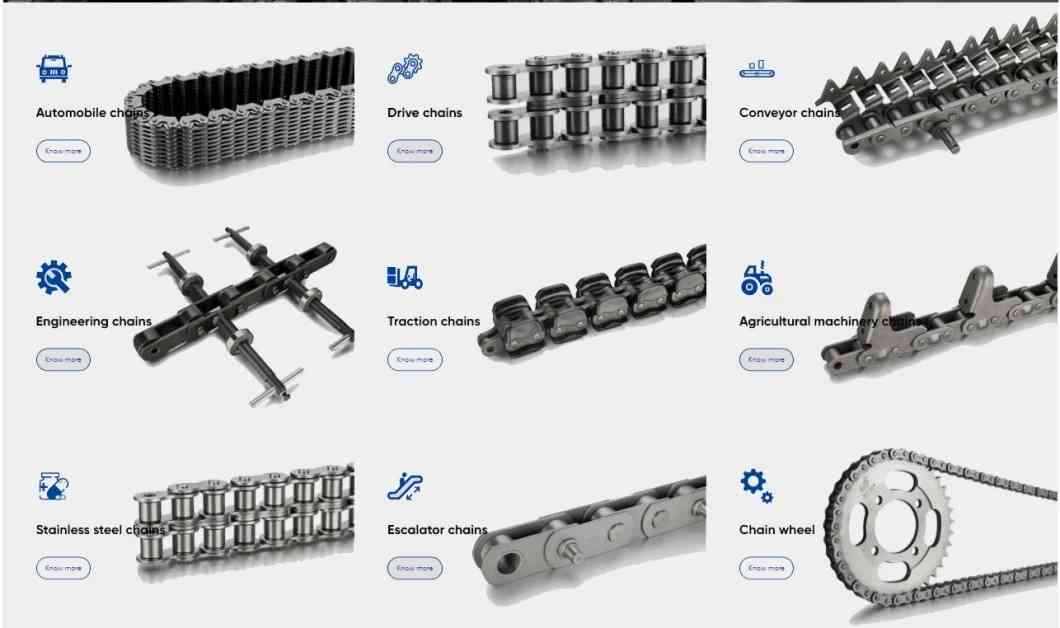
time chain
Timing chains fail for two reasons: complete damage and fatigue. Fatigue occurs when a timing chain reaches its breaking strength, and eventually, failure occurs when a timing chain exceeds its design life and suffers mechanical damage. Most timing chain failures are a combination of mechanical failure and fatigue. Chain chatter, engine misfires, and VVT systems can accelerate chain fatigue. If these causes of premature timing chain failure are not addressed, the timing chain could be permanently damaged.
In the past, the timing chain was the only drive chain available. Timing belts are a quieter alternative, but they are prone to failure and damage to valves and the engine. In recent years, OEM manufacturers have begun to return to the OHC/DOHC drive chain of the timing chain. This type of drive chain has many advantages, including the ability to simulate knock sensor vibrations. Additionally, the chain has better NVH performance, making it the drive chain of choice for automakers.
Timing Chains in Internal Combustion Engines
Internal combustion engines use timing chains to control intake and exhaust valves. The chain turns the camshaft at the right time and coordinates the movement of the valves on the cylinder head. This in turn allows the engine to generate power. The timing chain also controls the position of the intake and exhaust valves, ensuring that fuel and exhaust gases are expelled at the correct time. Incorrect timing in the vehicle can lead to misfires and other problems.
Chain drives in internal combustion engines are a common feature of many modern cars. It transmits rotational force from the crankshaft to the camshaft, which in turn controls the opening and closing of valves. The chain is lubricated with oil to prevent wear. Therefore, timing chains are often used in high-capacity engines, including trucks and motorcycles. But they do have some drawbacks.
A weakened timing chain can cause the engine to misfire, causing it to skip gears and lose coordination. A clicking sound may also indicate a problem. If the chain is too loose, it can also cause the engine to stall. If the chain is too loose, metal chips will appear in the oil. A clicking sound may also be heard when the engine is running. If you hear the engine stalling, it’s likely that the timing chain is the culprit.
Silent chains in internal combustion engines
The pitch difference between the drive sprocket and the silent chain reduces resonance sound, meshing shock, and accelerated wear at the chain and sprocket interface. The difference in pitch between the drive sprocket and the silent chain determines the loudness of the sound, and the system described here helps reduce it. The present invention is suitable for power transmission in internal combustion engines.
The earliest designs for silent chains come from the 1500s when Leonardo da Vinci sketched them. The SS Britannia propels the boat across the Atlantic using huge silent chains. By the mid-19th century, silent chains were used in nearly all types of industrial applications and as timing chains for early automobile engines. Due to their durability, these chains are durable and have smooth action.
In order to understand the mechanism of frictional losses in chains, various parameters must be considered. Speed, pitch, temperature and tension are the main parameters affecting friction loss. This test uses two types of chains to compare the frictional behavior between these two components. The results show that a single chain with a high pitch can increase the friction torque of another chain with the same pitch. These results provide an important basis for understanding the role of friction torque in internal combustion engines.
lifting chain
Lift chairs are designed to lift heavy objects and can be used with a variety of lifting equipment, including forklifts and cranes. Hoist chains are also used in warehouses and ports of all sizes and consist of a series of pins and plates that mesh with each other to move heavy loads. CZPT Chain manufactures high-precision lifting chains. Here are some of the benefits of hoist chains for drive chains.
Blade Chain: This type of drive chain has a patented U-profile that turns the flexible chain into a highly stable outer post during the push phase. This design is designed to minimize linkage tangling and provide better pressure transfer. These chains are used for cranes, anchors and straddle carriers. Blade chains are more durable than other types of drive chains and are especially useful in heavy duty applications.
The drive chain is also available in a variety of materials. For example, square link chains are commonly used in cranes and hoists. They are cheap to manufacture but more prone to overloading. Conveyor chains are specially designed for chain conveyor systems. It consists of a series of interconnected rectangular links. Oval links tend to kink and are usually only used at low speeds.
editor by CX 2023-06-12
China Standard ISO Standard Short Pitch Precision Simplex Hardware Motorcycle Industrial Roller Chain blind roller chain
Product Description
ISO Standard Short Pitch Precision Simplex Hardware Motorcycle Industrial Roller Chain
Product Description
1. Material: Alloy Steel
2. Surface Treatment: Shot peening
3. Application: The product is mainly applied in small lifting.
4. Chain No: 40-1, 50-1, 60-1, 80B-1, 10B-1, 12B-1, etc.
| Product name | ISO Standard Short Pitch Precision Simplex Hardware Motorcycle Industrial Roller Chain |
| Materials Available | 1. Stainless Steel: SS304, SS316, etc |
| 2. Alloy Steel: 45Mn, 42CrMo, 20CrMo, etc | |
| 3. OEM according to your request | |
| Surface Treatment | Shot peening, Blackening, Oxygenation, Polishing, Zinc-plated, Nickel-plated, Anodized, etc. |
| Characteristic | Fire Resistant, Oil Resistant, Heat Resistant |
| Design criterion | ISO DIN ANSI & Customer’s Drawing |
| Size | Customer’s Drawing & ISO standard |
| Package | Wooden Case / Container and pallet, or made-to-order |
| Certificate | ISO9001: 2008 |
| Advantage | Firtsr quality, Best service, Competitive price, Fast delivery |
| Delivery Time | 20 days for samples. 45 days for official order. |
Detailed Photos
View more products,please click here…
Company Profile
| Usage: | Transmission Chain |
|---|---|
| Material: | Alloy |
| Surface Treatment: | Oil Blooming |
| Feature: | Oil Resistant |
| Chain Size: | 40-1, 08b-1 |
| Structure: | Roller Chain |
| Samples: |
US$ 0/Meter
1 Meter(Min.Order) | |
|---|
| Customization: |
Available
| Customized Request |
|---|
How to choose a roller chain for a conveyor
When choosing a roller chain for your conveyor, the easiest way is to refer to the horsepower and RPM charts. The horsepower and rpm of the small drive sprocket will determine the size and number of teeth of the chain. Conveyor chains are available in a variety of options, including moving products horizontally, vertically, or around a bend radius. When choosing a conveyor chain, consider the purpose of the chain. For example, if you’re delivering products to customers’ doorsteps, you might choose chains that can move products up and down a hallway or warehouse.
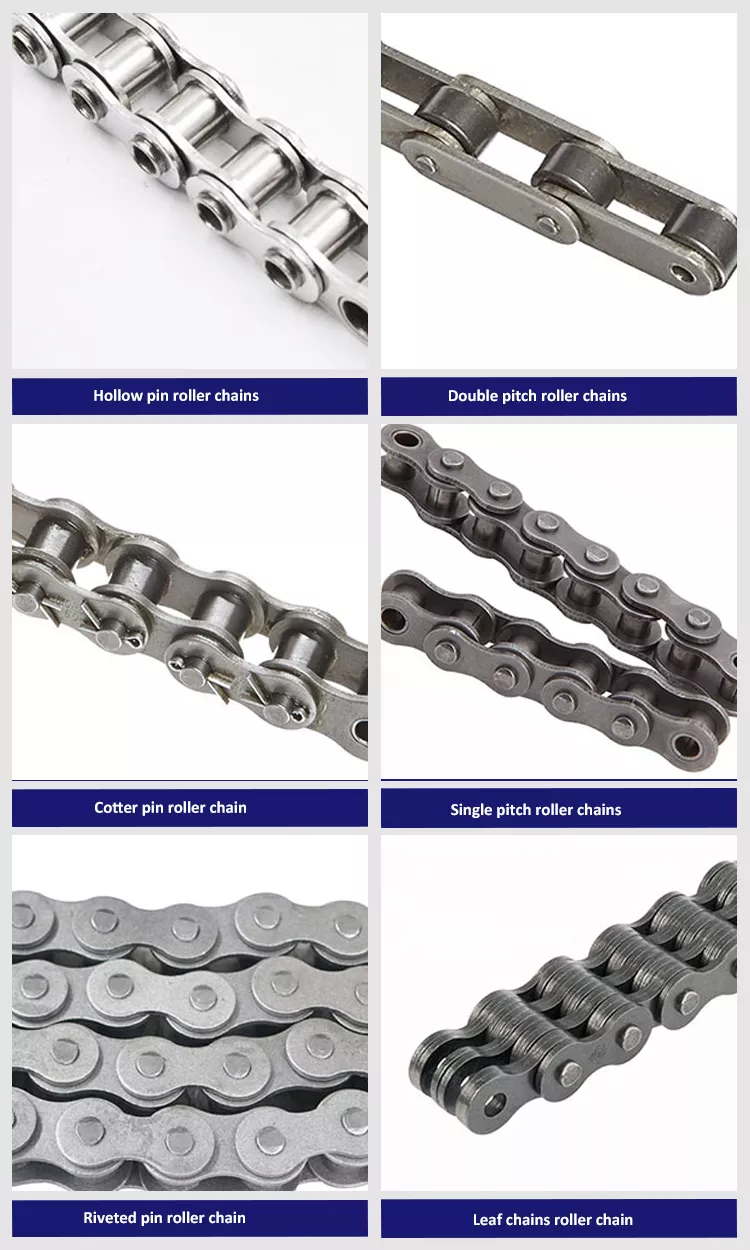
Double pitch
Double pitch roller chains are a popular way to drive agricultural equipment. It has twice the pitch of a standard roller chain and is ideal for light-duty drives. Extended pitch increases performance at lower speeds, but requires fewer components per foot than standard single-pitch chains. Compared to single-pitch roller chains, double-pitch chainplates are longer and are suitable for lighter loads. Read on to learn more about double pitch chains and how they can improve your operation.
The most common type of conveyor chain is double pitch. It is used in the auto parts industry, as well as in the precision machinery industry. It is made from the same components as the standard drive roller chain, except it has longer side plates. Double pitch chains are often used on slow-moving conveyors to reduce the stress placed on them. Industries that commonly use double pitch conveyor chains include airport equipment manufacturers, lumber mills, and fruit packing plants.
RS series roller chains are manufactured from high-quality stainless steel. It has excellent chemical and abrasion resistance and is available in a variety of cord lengths. RS sprockets have over 30 teeth. They contain all the necessary connection links for easy installation. PEER Chain offers double pitch roller chain attachments including pre-stretched chains, sprockets, and other attachments.
Double pitch roller chains have several advantages over standard chains. Double pitch chains have double the pitch, making them ideal for conveying applications such as conveyors. In addition to that, it also provides ANSI-compliant styles. These chains also have free connection links. When shopping for a double pitch roller chain, be sure to choose the one that fits your requirements and budget. They will last longer and save you money in the long run.
Double pitch roller chains to ANSI standards feature oversized rollers. These chains are best suited for applications where the product is mounted on top of the chain. They are ideal for agricultural applications where cotton is on top of the drum. Also, this type of chain is used in light-duty conveyors and agricultural applications. You can find double pitch roller chains in a variety of sizes and styles. And, as long as you know what you want, you’ll be happy with the results.
Self-lubricating
Self-lubricating roller chains eliminate the need for manual relubrication, providing long-lasting operation and reducing maintenance costs. These chains are particularly popular in industries such as the food and beverage industry, textiles, printing, and sawmills. They can also replace standard roller chain drives and conveyor chains. Manufactured to the specific standard ISO R606, these chains are ideal replacements for conventional chains. PC chains are particularly beneficial for food and beverage production and packaging applications due to their anti-corrosion properties.
Self-lubricating roller chains meet ISO, ASME/ANSI, and DIN standards. They are interchangeable with standard chains of the same size and shape and can be used in a variety of industrial applications. Self-lubricating chains have special oil-impregnated sleeves to reduce maintenance time. These chains are also suitable for applications where cleanliness is an issue.
Self-lubricating roller chains are manufactured with unique RS attachments. Rather than a traditional roller chain with an external lubricating ring, this type of chain retains the lubricant within its bushings. During operation, the application generates heat, heating the lubricant, which flows out of the pin and bushing area. Therefore, CZPT roller chains are ideal for certain food conveying applications.
In addition to self-lubricating roller chains, carbon steel, stainless steel or nickel-plated steel are also available. Self-lubricating roller chains are available in different sizes depending on the application, including 0.375″ wide profile straight-chain, extended pin chain, and four-link. In addition, these chains are also available in ANSI and BS chain specifications.
Accumulation
Whether you need to move large or small loads, accumulating roller chains are a viable solution. This chain conveyor is designed with low back pressure to transport large and bulky items with minimal noise. Free-running rollers within the chain help create a smooth build-up surface. These chains are available in a variety of options, including accumulating rollers of different pitches.
The accumulation and release roller chain 14 includes an upper part 15 and a lower part 16. The upper part 15 rests in the upper subspace 28, while the lower part 16 rests on the top side 20 of the profile. As the upper belt 15 rolls around the accumulation roller chain 14, it aligns with the lower chain 16 to form a continuous receiving space. This arrangement allows the accumulation roller chain 14 to rest on the top surface of the support profile 11.
A cumulative roller chain consists of many individual parts. Each section of the chain has an elongated cylindrical shape and is connected to each other by hinged joints. Each chain section also has an accumulation and release roller associated therewith. Each roller protrudes from the upper side 20 and the lower side 21 of the chain portion. The accumulation rollers are movable about an axis 22 extending transversely to the longitudinal axis of the chain.
A feature of the stacking and releasing roller chain is its simplicity. The conveyor has a profiled section that is permanently divided into two cross-sectional spaces. The bottom space is closed from all sides. The upper space accommodates the conveyor line. The contoured portion includes an opening that guides the bottom strap. A shunt can also be inserted between the two sections. The accumulating roller chain system is a convenient and versatile way to move bulky items.
There are many different types of accumulating roller chains. Some chains have offset rollers for optimal load distribution. Others have protection to prevent machine wear. Some run without lubricant, which is a safety advantage. In addition to protection, cumulative chains can also provide protection. The side bow version of the accumulation and release roller chain with offset accumulation and release rollers is designed for conveyor systems with very small bend radii.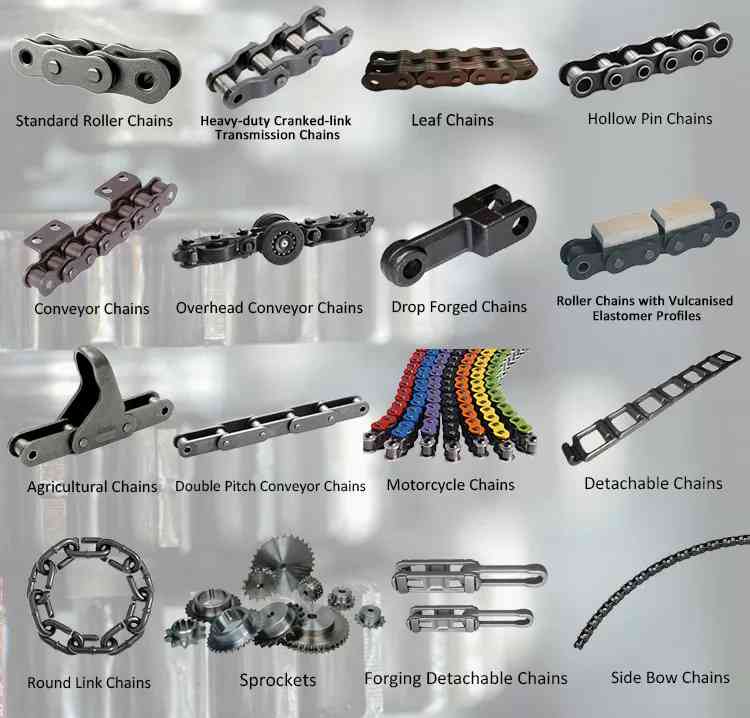
Without bushing
Bushless roller chains are the most common type of industrial chain. They are simple in design and require only regular maintenance. Regular maintenance includes lubricating, assessing wear, and replacing worn sprockets. For more information, please read the following information:
The outer chainplates and the inner chain plates are alternately arranged in pairs. The connecting pin extends through the hole in the inner link plate. The rollers thus positioned can be rotated on the connecting pins. Oil provided between the outer circumferential surfaces of each connecting pin serves to lubricate the chain. This system reduces noise and wears caused by collisions between inner chain plates and sprockets.
Compared to traditional roller chains, bushings roller chains have rollers around the bushing. These rollers are in rolling contact with the sprocket teeth, providing low friction and excellent wear resistance. To ensure smooth operation, bushings roller chains must be greased to prevent rust and keep the chain properly tensioned. Lubricated chains run smoother and last longer.
In a bushingless chain, the inner links are shaped like half bushings and ride on the rollers. The pins go through the outer plate and connect the inner links to the rollers. The outer plates overlap the inner links and open the pins. This system is also known as a heterochain. This type of chain is more common than traditional roller chains. If you are not sure which type of bushingless roller chain to choose, you may need to purchase an additional pair of inner chainplates.
Linerless roller chains may also include chain guides. In a bushingless roller chain, the outer and inner link plates conform to the surfaces of the guide rails. Thus, the large area of contact between the chain and the guide rail is eliminated, the friction loss is reduced, and the power transmission efficiency is improved. These properties make bushless roller chains more efficient and durable than traditional roller chains. It’s also less noisy. If you are looking for a chain with a lower noise level, a bushingless roller chain may be the right choice for you.
editor by CX 2023-06-02
China supplier Best Service Shot Peening Surface Treatment High Precision Zinc-Plated Motorcycle Industrial Roller Chain near me manufacturer
Merchandise Description
Solution Description
We can offer all sorts indutrial motorbike chains for transmission, these kinds of as the DIN8187 or ANSI regular roller chains, and specialised in this line for much more than 10years, with very good top quality and large status in our buyers.
Merchandise name: Roller Chain, chain, unique chain
Materials: 40Mn with heat-dealt with and with common thickness for plates
Technical specs:
Motorcycle chain 420, 428, 520, 525, 530, 630, 420OR, 428HVS, 520OR, 530HOR
1) A collection chains:
A) Simplex: 25-1 ~ 240-one
B) Duplex: 25-2 ~ 240-2
C) Triplex: 35-3 ~ 240-3
D) Quadruplex: forty-4 ~ 240-4
E) Quintuple: forty-5 ~ 240-5
F) Sextuple: 40-6 ~ 240-6
G) Octuple: forty-8 ~ 240-eight
two) B collection chains:
A) Simplex: 04B-1 ~ 72B-1
B) Duplex: 04B-2 ~ 72B-2
C) Triplex: 06B-3 ~ 72B-3
D) Quadruplex: 08B-4 ~ 48B-4
E) Quintuple: 08B-5 ~ 48B-5
F) Sextuple: 08B-6 ~ 48B-6
G) Octuple: 08B-8 ~ 48B-8
three) Hues available: Normal, yellow, blue, black
four) Resources: Carbon steel, stainless steel-304
5) also can be nickled plated or zinc plated for the chain components
Our Advantages
| WHY Select US |
Complete Item Portfolio We create and provide a broad range of energy transmission
goods such as push chains, leaf chains, conveyor chains, agricultural chains, sprockets, and
couplings. This 1-store-for-all shopping expertise will substantially minimize your seeking fees while
ensure youfind what you want at 1 click.
Price Selection Goods Our merchandise are the best mixture of high quality and cost, and you get what
you want within your budgets
Seasoned Product sales Associates and Engineers We have 15 seasoned income associates and 5 engineers
on our staff at your disposal any time when you need to have a assisting hand. They are effectively skilled with market
know-now and will often respond to your requests in 24 hours.
one hundred% Consumer Retention Rate Our standard clients from overseas occur again not just for our
quality good quality goods, but for the superior providers that we have provided above the many years.
| FAQ |
| Q1: What is your typical lead time? A: It varies. Our normal end-to-finish direct time is 1-2 months.. We also give specific shipments for rush orders. For particulars,please check with our revenue associate. Q2: Is your price tag better than your opponents given the very same good quality? This fall: Can we inspect the items prior to shipment? Q5: What kind of payment method is acceptable for your mill? Q6: What if I have any other questions? |
How a item is employed and taken care of is quite important, as is a skilled generation conveyWhat function can industrial conveyor chains engage in in use?
With the improvement of the social economic climate and the rise of the transportation gear sector, the production of the transportation chain has been more produced and utilized. An industrial conveyor chain is a sort of gear that employs chains as traction and provider to transport resources. Most of the common sleeve roller industrial conveyor chains are employed. So what position can industrial conveyor chains enjoy in use?
Industrial conveyor chains can also be utilized to some chain-driven conveyor products and machinery. Such as computerized conveying equipment such as assembly lines. Because his chain has the qualities of huge pitch, substantial center length, and reduced chain speed, it has turn into the technical standard of judgment.
The industrial conveyor chain is on the load-bearing chain, and a larger load-bearing roller attachment is additional among every single segment to have the goods. The industrial conveyor chain rolls and slides with the keep track of through rollers. Due to the fact the rollers of the industrial conveyor chain are in rolling get in touch with with the way, the frictional resistance is little, the energy reduction is low, and it can carry heavy objects. The bearing potential is relevant to the strength of the bracket, the size of the industrial conveyor chain, and the size and materials of the loafer. Rollers are generally made of metal, but in some instances, waste engineering plastics are employed to reduce sound.
Chain conveyors use chains as traction and provider to transport materials. The chain can be an normal sleeve roller chain or an additional specific chain. The industrial conveyor chain is composed of a positively related traction chain, a load-bearing chain, and a hopper, and the three elements can be freely loaded and unloaded. Rolling bearings are mounted on the load-bearing drum, which replaces the previous sliding friction with rolling friction, minimizes the managing resistance, significantly minimizes the electricity use of the conveyor, and decreases the vitality usage. The traction chain is separated from the load-bearing chain, which simplifies the composition, lowers the expense, and facilitates set up and upkeep.
or chain. What is the use and servicing strategy of a professional generation conveyor chain? The subsequent are use and maintenance approaches for specialist manufacturing conveyor chains.
When starting the conveyor chain, very first verify whether the conveyor chain is running typically and whether the noticed chain is tensioned.
Ahead of starting up the conveyor chain, bear in mind to close the chain brake to cease the conveyor chain to avoid threat during the start-up approach. Nonetheless, before working the conveyor chain, launch the chain brake or the bearings will be damaged. When the conveyor chain rotates, be mindful not to rub it from the floor or other objects. The conveyor chain need to be oiled in time and painted with anti-rust paint. If the conveyor chain is rusted, it need to be changed in time to boost perform performance.
Full technical specs of conveyor chain
The adhering to problems ought to be mentioned when utilizing and preserving the chain:
When starting the chain, initial check the operation of the chain and whether the tension of the noticed chain is normal.
Bear in mind to flip off the chain brake ahead of starting up to quit the chain and avoid hazards in the course of commencing. But the chain brake should be unveiled just before work, otherwise, the bearing will be damaged.
When the chain is spinning, be watchful not to rub it against the floor or other objects.
The chain must be oiled in time and painted with anti-rust paint. After the chain is rusted, it need to be replaced in time to increase work performance.
