Product Description
Simplex stainless 304 Roller Chain (08B-1, 24B-1)
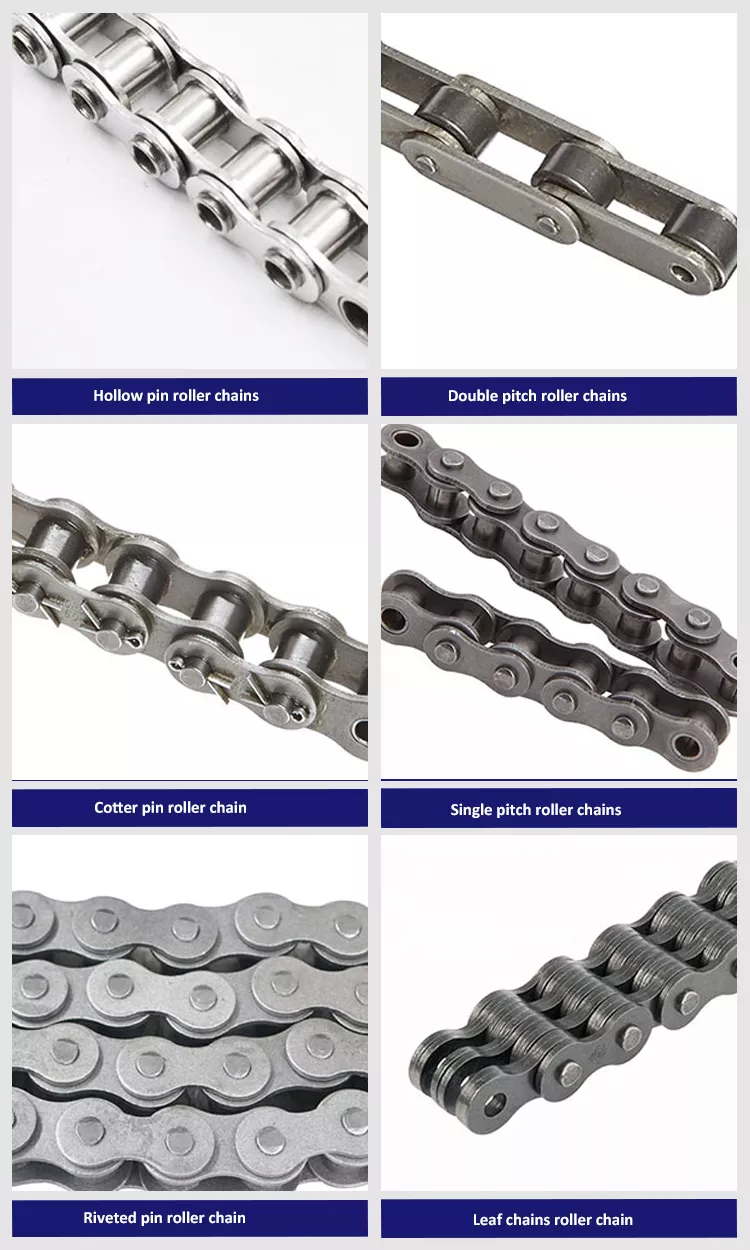
The most commonly used chain is roller chain or as it is also known transmission chain. These are the simplest chain drives, Used mainly for transmitting power. Can be supplied from 3mm pitch up to 4″ pitch in either mild steel or stainless steel.
| DIN/ISO Chain No. |
Pitch | Roller Diameter |
Width Between Inner Plates |
Pin Diameter |
Pin Length |
Inner Plate depth |
Plate thick ness |
Ultimate Tensile Strength |
Average Tensile Strength |
Weight Per Meter |
|
| Mm | mm | mm | mm | mm | mm | mm | mm | kN/LB | kN | Kg/m | |
| 04B-1 | 6.000 | 4.00 | 2.80 | 1.85 | 6.80 | 7.80 | 5.00 | 0.60 | 3.0/682 | 3.2 | 0.11 |
| 05B-1 | 8.000 | 5.00 | 3.00 | 2.31 | 8.20 | 8.90 | 7.10 | 0.80 | 5.0/1136 | 5.9 | 0.20 |
| *06B-1 | 9.525 | 6.35 | 5.72 | 3.28 | 13.15 | 14.10 | 8.20 | 1.30 | 9.0/2045 | 10.4 | 0.41 |
| 08B-1 | 12.700 | 8.51 | 7.75 | 4.45 | 16.70 | 18.20 | 11.80 | 1.60 | 18.0/4091 | 19.40 | 0.69 |
| 10B-1 | 15.875 | 10.16 | 9.65 | 5.09 | 19.50 | 20.90 | 14.70 | 1.70 | 22.4/5091 | 27.50 | 0.93 |
| 12B-1 | 19.050 | 12.07 | 11.68 | 5.72 | 22.50 | 24.2 | 16.00 | 1.85 | 29.0/6591 | 32.20 | 1.15 |
| 16B-1 | 25.400 | 15.88 | 17.02 | 8.28 | 36.10 | 37.4 | 21.00 | 4.15/3.1 | 60.0/13636 | 72.80 | 2.71 |
| 20B-1 | 31.750 | 19.05 | 19.56 | 10.19 | 41.30 | 45.0 | 26.40 | 4.5/3.5 | 95.0/21591 | 106.7 | 3.70 |
| 24B-1 | 38.100 | 25.40 | 25.40 | 14.63 | 53.40 | 57.80 | 33.20 | 6.0/4.8 | 160.0/36364 | 178.0 | 7.10 |
| 28B-1 | 44.450 | 27.94 | 30.99 | 15.90 | 65.10 | 69.50 | 36.70 | 7.5/6.0 | 200.0/45455 | 222.0 | 8.50 |
| 32B-1 | 50.800 | 29.21 | 30.99 | 17.81 | 66.00 | 71.0 | 42.00 | 7.0/6.0 | 250.0/56818 | 277.5 | 10.25 |
| 40B-1 | 63.50 | 39.37 | 38.10 | 22.89 | 82.20 | 89.2 | 52.96 | 8.5/8.0 | 355.0/80682 | 394.0 | 16.35 |
| 48B-1 | 76.20 | 48.26 | 45.72 | 29.24 | 99.10 | 107.0 | 63.80 | 12.0/10.0 | 560.0/127272 | 621.6 | 25.00 |
| 56B-1 | 88.90 | 53.98 | 53.34 | 34.32 | 114.60 | 123.0 | 77.80 | 13.5/12.0 | 850.0/193180 | 940.0 | 35.78 |
| *Bushing chain: d1 in the table indicate the external diameter of bushing |
|||||||||||
We own the sophisticated equipment and the advanced technology, such as:
1. CAD Designer
2. Wire Cutting Machine
3. Chain Running In Machine
4. Conveyor Furance
5. Ball Drift
6. Shot Peened Parts
7. Design Of Link Plate Waist
Company Detail:
GOODLUCK TRANSMISSION is 1 of a professional exporter with exporting POWER TRANSMISSION PARTS: Roller chains,conveyor chain,stainless steel chains, agricultural chains, steel detachable chains, special chains, sprockets, s. S. Sprockets, HRC couplings, pulleys, bushes etc. All these products have been supplied regularly to World Wide for over 15 years.
Welcome contact for more detail.
Company Detail:
GOODLUCK TRANSMISSION is 1 of a professional exporter with exporting POWER TRANSMISSION PARTS: Roller chains,conveyor chain,stainless steel chains, agricultural chains, steel detachable chains, special chains, sprockets, s. S. Sprockets, HRC couplings, pulleys, bushes etc. All these products have been supplied regularly to World Wide for over 15 years.
Welcome contact for more detail.
Company Detail:
GOODLUCK TRANSMISSION is 1 of a professional exporter with exporting POWER TRANSMISSION PARTS: Roller chains,conveyor chain,stainless steel chains, agricultural chains, steel detachable chains, special chains, sprockets, s. S. Sprockets, HRC couplings, pulleys, bushes etc. All these products have been supplied regularly to World Wide for over 15 years.
Welcome contact for more detail.
Sofia Chen(Sales Manager)
HangZhou Goodlukc Transmission Technology Co.,Ltd.
716 Gold River Center,NO.88 Shishan Rd.,
New District,HangZhou,P.R.China.P.C.:215011
| Usage: | Transmission Chain |
|---|---|
| Material: | Stainless steel |
| Surface Treatment: | Polishing |
| Feature: | Heat Resistant |
| Chain Size: | 1/2"*3/32" |
| Structure: | Roller Chain |
| Customization: |
Available
| Customized Request |
|---|

What are the factors to consider when designing a gripper chain system?
Designing a gripper chain system involves considering various factors to ensure optimal performance and functionality. Here are some key factors to consider:
- Application requirements: Understand the specific requirements of the application, including the type of product to be conveyed or gripped, the desired speed and throughput, the environmental conditions, and any regulatory or industry-specific standards that need to be met.
- Load capacity: Determine the maximum load the gripper chain system needs to handle. Consider the weight, size, and shape of the products to be conveyed or gripped, as well as any dynamic or impact loads that may be present.
- Gripping mechanism: Choose the appropriate gripper elements or attachments based on the product characteristics and the required grip strength. Consider factors such as grip surface area, material compatibility, and the ability to release the product smoothly and accurately.
- Chain configuration: Select the appropriate chain type, pitch, and width based on the load requirements, speed, and available space. Consider factors such as the desired conveying or gripping motion, the required flexibility, and the overall system layout.
- Material selection: Choose materials for the chain links, gripper elements, and other components that are compatible with the product being conveyed or gripped, as well as the operating environment. Consider factors such as corrosion resistance, wear resistance, and the ability to withstand any temperature or chemical exposures.
- System integration: Ensure proper integration of the gripper chain system with the overall conveyor or handling equipment. Consider factors such as the sprocket design, drive mechanism, tensioning system, and any automation or control requirements.
- Maintenance and durability: Consider the ease of maintenance, accessibility for cleaning, and the expected lifespan of the gripper chain system. Choose components that are durable and reliable to minimize downtime and maximize operational efficiency.
It is crucial to work closely with experienced engineers, conveyor system manufacturers, or suppliers specializing in gripper chain systems to ensure the design meets the specific requirements of the application and delivers optimal performance and reliability.

How do gripper chains handle side-to-side movement in conveying applications?
Gripper chains are designed to effectively handle side-to-side movement in conveying applications. Here’s how they handle this movement:
Gripper chains typically consist of a series of interconnected links with gripper attachments. These grippers securely hold the conveyed items, such as bottles, containers, or products, during the conveying process. The grippers are strategically positioned along the chain and can be customized to match the shape and size of the conveyed items.
When side-to-side movement is required in a conveying application, gripper chains can accommodate this through specific design features:
1. Gripper Attachment Design: Gripper chains are designed with gripper attachments that allow the items to move laterally while still maintaining a secure grip. The grippers are typically flexible or have some degree of movement to accommodate the side-to-side motion without compromising the grip on the conveyed items.
2. Chain Flexibility: Gripper chains are designed to have a certain level of flexibility, allowing them to adapt to the side-to-side movement of the conveyed items. This flexibility ensures that the grippers can adjust their position and maintain a reliable grip on the items during lateral motion.
3. Guide Rails and Track Systems: In some cases, guide rails or track systems are used in conjunction with gripper chains to guide the lateral movement of the conveyed items. These guide rails provide additional stability and control, ensuring smooth and precise side-to-side motion.
4. Tensioning Systems: Proper tensioning of the gripper chains is crucial to maintain consistent and reliable performance during side-to-side movement. Tensioning systems, such as tensioners or adjusters, are used to control the tension in the chain, ensuring optimal grip and minimizing slack that could affect the lateral movement.
By utilizing these design features, gripper chains can effectively handle side-to-side movement in conveying applications. They provide secure gripping and reliable transportation of items, even when lateral motion is required.

What are the different types of gripper chains available?
A gripper chain, also known as a grip chain or gripper conveyor chain, comes in various types and configurations to accommodate different application requirements. These types can vary based on the design of the gripper attachments or the specific functionality they offer. Here’s a detailed answer to the question:
1. Curved Finger Gripper Chain: This type of gripper chain features curved fingers or attachments that provide a secure grip on items with curved surfaces or irregular shapes. The curved shape helps conform to the contour of the items, ensuring reliable gripping and preventing slippage during transportation.
2. Flat Finger Gripper Chain: Flat finger gripper chains have flat gripper attachments that are suitable for gripping items with flat surfaces. These chains are commonly used in applications where items need to be held flat or at a specific angle during transport or assembly.
3. Hook Gripper Chain: Hook gripper chains have hook-shaped gripper attachments that are designed to engage with items that have a handle or a hanging point. The hooks securely hold the items, allowing for convenient and controlled transportation.
4. Specialized Gripper Chain: In addition to the above types, there are specialized gripper chains available for specific applications. These may include chains with custom-designed gripper attachments to accommodate unique shapes or sizes of items. They are tailored to meet the specific requirements of the application, providing optimal gripping and transportation capabilities.
When selecting a gripper chain, it’s essential to consider factors such as the shape and size of the items being handled, the weight and load capacity requirements, the speed and precision of transport, and the environmental conditions. Proper selection ensures that the gripper chain performs effectively and reliably in the intended application.
Regular maintenance, including lubrication, tension adjustment, and periodic inspection of the gripper chain, is necessary to ensure optimal performance and extend its lifespan.


editor by CX 2023-10-16
China Best Sales High Quality Motorcycle Conveyor Roller Chain Stainless Steel Professional China Factory Supply (ANSI, BS, DIN, JIS Standard)
Product Description
High Quality Motorcycle Conveyor Roller Chain Stainless Steel Professional China Factory Supply (ANSI, BS, DIN, JIS Standard)
Product Description
1. Material: Stainless steel / Alloy steel / Made to order
2. Surface Treatment: Zinc-Plated / Nickel-Plated / Shot Peening / Blackening
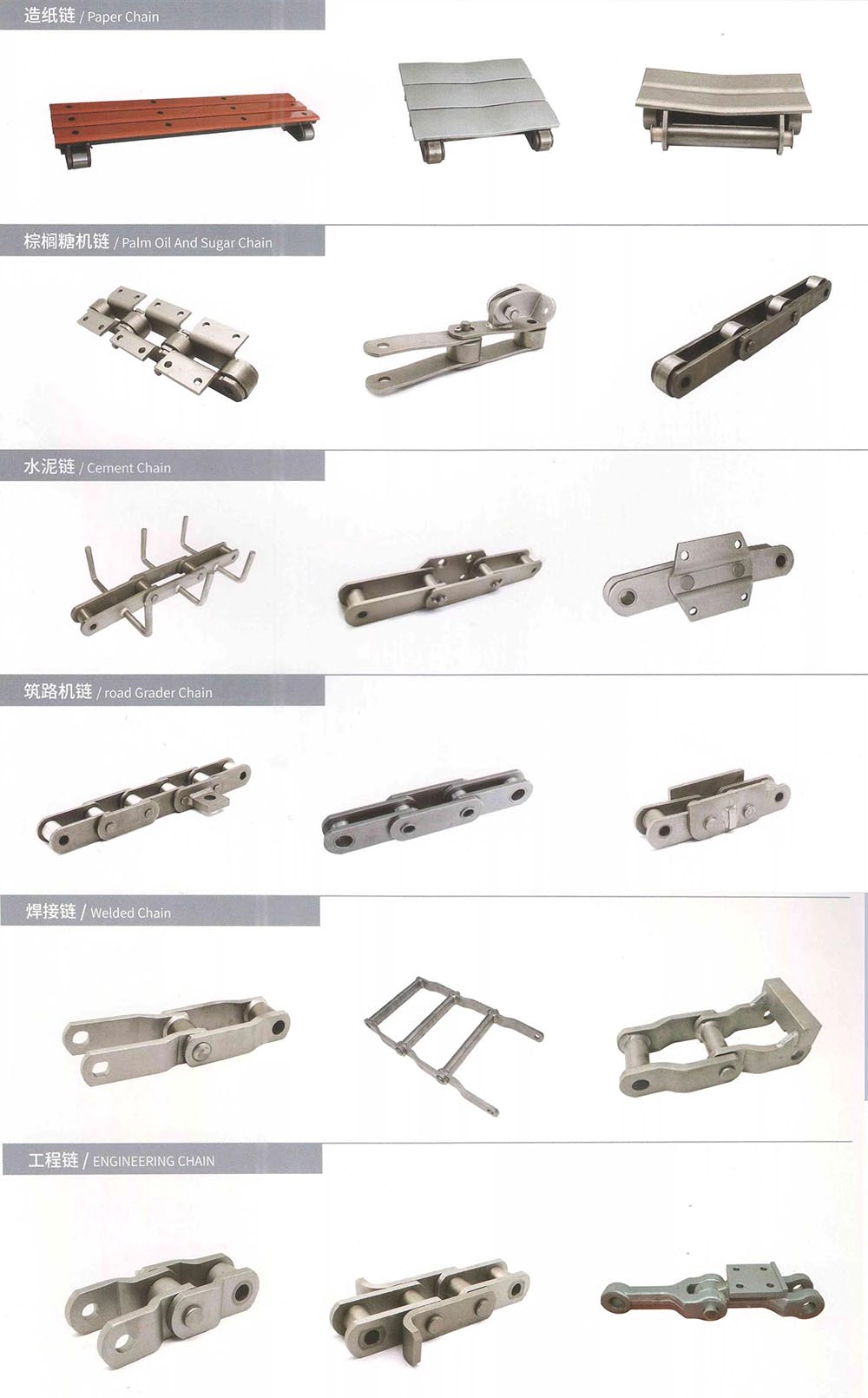
3. Chain Type: Roller chains, Drive chains,Conveyor Chains, Hollow Pin Chains,Welded chains, Steel Pin Chains, Palm oil chains,Sugar Mill Chains.ect.
4. Application: Chains is a very important industry parts, The many industry will be use chain. For examples Sugar mill ,Steel mill,Cement mill, Palm oil mill and more. thus the chain is industrial family main member.
5. “PLW” Company Purpose : Powering Your Business Worldswide. Driving the word and future.
| Product name | High Quality Motorcycle Conveyor Roller Chain Stainless Steel Professional China Factory Supply (ANSI, BS, DIN, JIS Standard) |
| Chain Type | 1. Driving Chain (roller chain, Heavy Duty Cranked-Link,Bushing Chains etc) |
| 2. Conveyor Chain( Double Pitch chains,,MT & MC Series etc) | |
| 3. Hollow Pin Chain | |
| 4. Palm Oil Chain | |
| 5. Sugar Mill Chain | |
| 6. Welded Steel Chain | |
| 7. Rubber Glove Chain | |
| Surface Treatment | Shot peening, Blackening, Oxygenation, Polishing, Zinc-plated, Nickel-plated, Anodized, etc. |
| Characteristic | Fire Resistant, Oil Resistant, Heat Resistant |
| Design criterion | ISO DIN ANSI & Customer’s Drawing |
| Size | Customer’s Drawing & ISO Standard |
| Package | Wooden Case / Container and pallet, or made-to-order |
| Certificate | ISO9001: 2008 |
| Advantage | First quality, Best Service, Competitive price, Fast delivery |
| Delivery Time | 20 days for samples. 45 days for official order. |
View more products,please click here…
Company Profile
| Material: | Steel or Stainless Steel etc |
|---|---|
| Structure: | Chain |
| Surface Treatment: | Shot Peening, Blackening, Oxygenation, Polishing, |
| Chain Size: | All of The Chain |
| Feature: | Fire Resistant, Heat Resistant |
| Transport Package: | Plastic Bag+Box+Plywood Case |
| Samples: |
US$ 0/Meter
1 Meter(Min.Order) | |
|---|
| Customization: |
Available
| Customized Request |
|---|
What are the factors to consider when designing a gripper chain system?
Designing a gripper chain system involves considering various factors to ensure optimal performance and functionality. Here are some key factors to consider:
- Application requirements: Understand the specific requirements of the application, including the type of product to be conveyed or gripped, the desired speed and throughput, the environmental conditions, and any regulatory or industry-specific standards that need to be met.
- Load capacity: Determine the maximum load the gripper chain system needs to handle. Consider the weight, size, and shape of the products to be conveyed or gripped, as well as any dynamic or impact loads that may be present.
- Gripping mechanism: Choose the appropriate gripper elements or attachments based on the product characteristics and the required grip strength. Consider factors such as grip surface area, material compatibility, and the ability to release the product smoothly and accurately.
- Chain configuration: Select the appropriate chain type, pitch, and width based on the load requirements, speed, and available space. Consider factors such as the desired conveying or gripping motion, the required flexibility, and the overall system layout.
- Material selection: Choose materials for the chain links, gripper elements, and other components that are compatible with the product being conveyed or gripped, as well as the operating environment. Consider factors such as corrosion resistance, wear resistance, and the ability to withstand any temperature or chemical exposures.
- System integration: Ensure proper integration of the gripper chain system with the overall conveyor or handling equipment. Consider factors such as the sprocket design, drive mechanism, tensioning system, and any automation or control requirements.
- Maintenance and durability: Consider the ease of maintenance, accessibility for cleaning, and the expected lifespan of the gripper chain system. Choose components that are durable and reliable to minimize downtime and maximize operational efficiency.
It is crucial to work closely with experienced engineers, conveyor system manufacturers, or suppliers specializing in gripper chain systems to ensure the design meets the specific requirements of the application and delivers optimal performance and reliability.
Are there any safety considerations when working with gripper chains?
Working with gripper chains requires adherence to safety protocols to prevent accidents and ensure the well-being of personnel. Here are some important safety considerations:
1. Training and Education: Ensure that operators and maintenance personnel receive proper training on the safe use, handling, and maintenance of gripper chains. They should be familiar with the equipment’s operation, safety procedures, and emergency protocols.
2. Protective Equipment: Personnel working with gripper chains should wear appropriate personal protective equipment (PPE) such as safety glasses, gloves, and protective clothing. This safeguards against potential hazards like sharp edges, pinch points, or flying debris.
3. Lockout/Tagout Procedures: Implement lockout/tagout procedures when performing maintenance or repair tasks on equipment involving gripper chains. This ensures that machinery is de-energized and cannot be accidentally started, reducing the risk of injury.
4. Machine Guarding: Install proper machine guarding to prevent accidental contact with moving parts, including gripper chains. Use barriers, shields, or enclosures to minimize the risk of injury caused by inadvertent contact.
5. Proper Lifting Techniques: When handling heavy gripper chains or related components, employ proper lifting techniques to avoid strains or injuries. Use lifting equipment, such as cranes or hoists, if necessary.
6. Regular Inspections: Conduct routine inspections of gripper chains to identify any signs of wear, damage, or misalignment. Address any issues promptly to prevent accidents or equipment failure.
7. Safe Work Practices: Follow safe work practices, such as keeping hands and clothing clear of moving parts, avoiding reaching into the machinery during operation, and using tools or equipment only for their intended purposes.
8. Emergency Preparedness: Have clear emergency procedures in place, including evacuation plans and access to first aid kits. Train personnel on emergency response protocols and ensure that they are aware of emergency stop buttons or switches.
9. Read and Follow Manuals: Familiarize yourself with the manufacturer’s instructions, safety guidelines, and warnings provided in the equipment manuals. Adhere to their recommendations and limitations.
It is essential to prioritize safety when working with gripper chains to mitigate potential risks and create a safe working environment for all personnel involved.
What is a gripper chain and how is it used?
A gripper chain, also known as a grip chain or gripper conveyor chain, is a type of roller chain designed specifically for gripping and transporting items in a controlled manner. It is commonly used in various material handling and conveyor systems. Here’s a detailed answer to the question:
A gripper chain consists of a series of interconnected links, typically made of steel, that have special gripper attachments or fingers. These gripper attachments are strategically positioned along the chain and are designed to securely hold items during transportation.
The gripper attachments on the chain can take different forms depending on the application requirements. They may have curved or flat surfaces, hooks, or other specialized shapes to accommodate the specific shape and size of the items being handled. The gripper attachments are typically made of durable materials such as plastic or metal to ensure reliable gripping and longevity.
Gripper chains are used in various industries and applications where precise control and secure transportation of items are necessary. Some common uses include:
- Material Handling: Gripper chains are utilized in material handling systems to transport items such as bags, boxes, trays, or components between different stages of production or processing. The gripper attachments securely grip the items, preventing slippage or damage during movement.
- Packaging: Gripper chains are often employed in packaging machinery to control the movement of products through the packaging process. They ensure precise positioning and orientation of items, allowing for accurate packaging and labeling.
- Assembly Lines: Gripper chains facilitate the assembly process by carrying and positioning components or parts at various workstations. They enable the controlled transfer of items, ensuring the smooth flow of production and minimizing the risk of errors.
- Conveyor Systems: Gripper chains are used in conveyor systems where items need to be conveyed at specific intervals or in a synchronized manner. The gripper attachments engage with the items, holding them securely as they are transported along the conveyor.
Gripper chains offer several advantages in these applications. They provide a reliable and efficient method for gripping and transporting items, ensuring precise control and minimizing the risk of slippage or mishandling. The design of gripper chains allows for customization to suit specific application requirements, including the size, shape, and weight of the items being transported.
It’s important to select the appropriate gripper chain based on factors such as load capacity, speed requirements, and environmental conditions. Regular inspection and maintenance, including lubrication and tension adjustment, help ensure optimal performance and extend the lifespan of the gripper chain in the intended application.
editor by CX 2023-08-23
China best DIN Power Transmission Industry Carbon Steel Stainless Steel Heavy Duty a B Series Conveyor Chain for Industrial Applications Roller Chain 08b\10b\12b\16b
Product Description
Product Description
Vision Group is 1 of the largest manufacturers of Driving Chain, Conveyor Chain, Motorcycle Chain, Hoisting Chain, Agriculture Chain, Stainless Steel Chain, Dropped Forged Rivetless Chain, Long Pitch Conveyor Chain and so on.
GB/T, DIN, ANSI, ISO, BS, JIS.
ISO9001: 2000 and ISO1400: 2004.
Product Attribute
| Product name | Transmission Standard Roller Chain |
|
Surface Treatment |
Shot Peening ,Tempering Oiling ,Nickel-plated Grease, zince plated, Heat Treatment ,Stain proofing Carburizing ,Pre-stretched and anti-fatigue ,Quenching |
| Product application | Industry machine,Agriculture, mining, metallurgy, petrochemical industry, lifting and transportation and other industries |
| Product Series |
Series A, Series B, Heavy Duty |
| material |
Stainless steel and carbon steel |
| structure |
Simplex/Duplex/Triplex |
| Port |
Any sea port or airport in China |
| Brand | TV OEM |
| Payment |
L/C, T/T, D/P, Western Union |
| Package |
Chain, Plastic Bag, Color Box, Wooden Case. or OEM |
| A Series | 03C,04C-1,06C-1,085-1,08A-1,10A-1,12A-1,16A-1,20A-1,24A-1,28A-1,32A-1,36A-1,40A-1,48A-1.
15,25,35,41,40,50,60,80,100,120,140,160,180,200,240 |
| 04C-2,06C-2,085-2,08A-2,10A-2,12A-2,16A-2,20A-2,24A-2,28A-2,32A-2,36A-2,40A-2,48A-2.
25-2,35-2,41-2,40-2,50-2,60-2,80-2,100-2,120-2,140-2,160-2,180-2,200-2,240-2. |
|
| 04C-3,06C-3,085-3,08A-3,10A-3,12A-3,16A-3,20A-3,24A-3,28A-3,32A-3,36A-3,40A-3,48A-3.
25-3,35-3,41-3,40-3,50-3,60-3,80-3,100-3,120-3,140-3,160-3,180-3,200-3,240-3. |
|
| B Series | 05B-1,06B-1,08B-1,10B-1,12B-1,16B-1,20B-1,24B-1,28B-1,32B-1,40B-1,48B-1,56B-1,64B-1,72B-1. |
| 05B-2,06B-2,08B-2,10B-2,12B-2,16B-2,20B-2,24B-2,28B-2,32B-2,40B-2,48B-2,56B-2,64B-2,72B-2. |
|
| 05B-3,06B-3,08B-3,10B-3,12B-3,16B-3,20B-3,24B-3,28B-3,32B-3,40B-3,48B-3,56B-3,64B-3,72B-3. |
|
| Heavy Duty | 08AH-1,10AH-1,12AH-1,16AH-1,20AH-1,24AH-1,28AH-1,32AH-1,36AH-1,40AH-1,48AH-1
35H,40H,50H,60H,80H,100H,120H,140H,160H,180H,200H,240H |
| 12AH-2,16AH-2,20AH-2,24AH-2,28AH-2,32AH-2,40AH-2,
35H-2,40H-2,50H-2,60H-2,80H-2,100H-2,120H-2,140H-2,160H-2,180H-2,200H-2,240H-2. |
|
| 12AH-3,16AH-3,20AH-3,24AH-3,28AH-3,32AH-3,40AH-3
35H-3,40H-3,50H-3,60H-3,80H-3,100H-3,120H-3,140H-3,160H-3,180H-3,200H-3,240H-3. |
|
| Double pitch Series |
208A,208B,210A,210B,212A,212B,216A,216AH,216B,220A,220B,224A,224B,228B,232B
2040,2050,2060,2080,2080H,2100,2120 |
| We also carry out OEM according to your requirements | |
Product Parameters
Our Advantages
Company advantages:
Own Import & Export License, The TV trade mark registered successfully in many countries, Sales network spread all over China, Products export to 65 countries in 5 continents.
Membership:
1. The member of China General Machine Components Industry Association.
2. The member of China Chain Transmission Association.
3. The member of China Chain Standardization Association.
4. The member of China Agricultural Association Machinery Manufacturers.
With our excellent trained staffs and workers, advanced and efficient equipments, completely sales network, strict QA systems. You are confidence that our premium qualified chain can meet all customers’ specification and strictest quality standards.
WHY CHOOSE US
Comprehensive Product Portfolio We produce and supply a wide range of power transmission
products including drive chains, leaf chains, conveyor chains, agricultural chains, sprockets, and
couplings. This one-store-for-all shopping experience will significantly reduce your searching costs while
guarantee youfind what you want at 1 click.
Value Choice Products Our products are the best combination of quality and price, and you get what
you want within your budgets
Seasoned Sales Associates and Engineers We have 15 seasoned sales associates and 5 engineers;
on our team at your disposal any time when you need a helping hand. They are well trained with industry
know-now and will always respond to your requests within 24 hours.
100% Customer Retention Rate Our regular customers from overseas come back not just for our
premium quality products, but for the superior services that we’ve provided over the years.
FAQ
Q1: What’s your average lead time?
A: It varies. Our regular end-to-end lead time is 1-2 months.. We also provide express shipments for rush orders. For details,please consult our sales associate.
Q2: Is your price better than your competitors given the same quality?
A: Definitely YES. We provide the most competitive price in the power transmission industry. If price disparity exists, we’ll be more than happy to do a price match.
Q3: Can you make chains according to my CAD drawings?
A: Yes. Besides the regular standard chains, we produce non-standard and custom-design products to meet the specific technical requirements. In reality, a sizable portion of our production capacity is assigned to make non-standard products.
Q4: Can we inspect the goods before shipment?
A: Yes. You or your representative or any third-party inspection party assigned is allowed access to our facility and do the inspection.
Q5: What kind of payment method is acceptable for your mill?
A: We’re flexible. We take T/T, L/C, or any other online payment methods so long as it’s applicable for you.
Q6: What if I have any other questions?
A: Whenever in doubt, you’re always encouraged to consult our sales associate any time – They will help you to your satisfaction.
|
Shipping Cost:
Estimated freight per unit. |
To be negotiated |
|---|
| Usage: | Transmission Chain |
|---|---|
| Material: | Alloy/Carbon Steel |
| Surface Treatment: | Polishing |
| Customization: |
Available
| Customized Request |
|---|

How do gripper chains handle product orientation and positioning?
Gripper chains are specifically designed to handle product orientation and positioning tasks in various industrial applications. These chains utilize specialized gripper attachments that securely hold and manipulate the products as they move along the conveying system. Here’s a detailed explanation of how gripper chains handle product orientation and positioning:
- Gripper Attachment Design: Gripper chains feature specially designed attachments or gripper fingers that are strategically positioned along the chain. These grippers are engineered to securely hold and manipulate the products during the conveying process.
- Flexible Gripper Configurations: Gripper chains can be configured in different arrangements to accommodate various product shapes and sizes. The gripper attachments can be customized to match the specific requirements of the application, allowing for effective product orientation and positioning.
- Precision and Control: Gripper chains offer precise control over the product positioning. The gripper attachments can be designed to exert the required amount of force to hold and manipulate the products without causing damage or misalignment.
- Adjustability: Some gripper chain systems feature adjustable gripper attachments that allow for quick and easy adaptation to different product sizes or orientations. This flexibility enables efficient handling of a wide range of products within the same conveying system.
- Smooth and Consistent Movement: Gripper chains are designed to ensure smooth and consistent movement of the products. This helps in maintaining the desired product orientation and positioning throughout the conveying process, minimizing the risk of misalignment or errors.
- Integration with Control Systems: Gripper chains can be integrated with control systems that provide precise coordination between the chain movement and the product manipulation. This allows for seamless product orientation and positioning based on the desired workflow or operational requirements.
Overall, gripper chains offer reliable and efficient handling of products, ensuring accurate orientation and positioning during the conveying process. By selecting the appropriate gripper chain design, gripper attachments, and control system integration, manufacturers can achieve precise control and consistency in product handling tasks.
Can gripper chains be used in food processing or packaging industries?
Gripper chains can indeed be used in food processing and packaging industries, but there are specific considerations and requirements to ensure compliance with food safety standards. Here are some key points to consider:
1. Food-Grade Materials: Gripper chains used in food-related applications must be made of food-grade materials such as stainless steel or plastic that are resistant to corrosion and can withstand frequent cleaning and sanitization.
2. Hygienic Design: Gripper chains should have a hygienic design with smooth surfaces, minimal crevices, and easy-to-clean components. This helps prevent the accumulation of food particles, bacteria, and other contaminants.
3. Easy Disassembly and Cleaning: The design of the gripper chains should facilitate easy disassembly and reassembly for thorough cleaning and sanitization. Quick-release mechanisms and accessible parts make the cleaning process more efficient.
4. Sanitary Conveying: Gripper chains should be used in conjunction with conveyors designed for food processing and packaging. These conveyors should have features like washdown capabilities, food-grade belts, and appropriate sanitation protocols to ensure the overall cleanliness of the system.
5. Compliance with Regulations: It is crucial to comply with relevant food safety regulations, such as the Food Safety Modernization Act (FSMA) in the United States or equivalent regulations in other countries. This includes maintaining records of cleaning and sanitation procedures, implementing proper pest control measures, and conducting regular inspections.
6. Quality Control: Implement quality control measures to ensure the integrity and safety of the gripper chains and related equipment. This includes routine inspections, testing for contamination or foreign objects, and maintaining proper documentation.
7. Training and Awareness: Train employees on food safety practices, including proper handling of gripper chains, maintaining hygiene, and following established protocols. Regularly reinforce the importance of food safety and provide refresher training as needed.
It is essential to work closely with reputable suppliers and industry experts to select and maintain gripper chains that meet the specific requirements of the food processing and packaging industries. Adhering to stringent food safety standards helps ensure the production of safe and high-quality food products.

How do you select the right gripper chain for a specific application?
Choosing the right gripper chain for a specific application involves considering several factors to ensure optimal performance and reliability. Here’s a detailed answer:
- Load Capacity: Evaluate the maximum weight and size of the items to be gripped and transported by the chain. Select a gripper chain that can safely handle the anticipated load without excessive strain.
- Gripping Method: Determine the preferred gripping method for your application, such as clamping, pinching, or suction. Ensure the gripper chain design aligns with the desired gripping mechanism.
- Speed and Precision: Consider the required speed and precision of item handling. Some gripper chains are designed for high-speed applications, while others offer more precise positioning capabilities.
- Environmental Conditions: Evaluate the operating environment for factors such as temperature, humidity, dust, or chemical exposure. Choose a gripper chain that is resistant to corrosion, abrasion, and other environmental challenges.
- Chain Material: Select a chain material that is suitable for the application’s requirements. Common materials include stainless steel for its corrosion resistance, carbon steel for general-purpose applications, and specialty plastics for lightweight and non-marring applications.
- Chain Size and Configuration: Determine the appropriate chain size based on the anticipated load and gripping requirements. Consider factors such as chain pitch, link width, and overall chain length. Additionally, select the appropriate gripper configuration, such as finger-style, jaw-style, or custom-designed grippers.
- Compatibility: Ensure compatibility between the gripper chain and the associated equipment, such as conveyor systems, robotic arms, or gripper mechanisms. Consider factors such as mounting options, attachment methods, and integration with existing equipment.
- Maintenance and Serviceability: Evaluate the ease of maintenance and serviceability of the gripper chain. Look for features such as removable or replaceable gripper fingers, accessible lubrication points, and ease of chain tension adjustment.
By considering these factors and consulting with gripper chain manufacturers or suppliers, you can select the right gripper chain that meets the specific requirements of your application, ensuring efficient and reliable item handling and gripping.
editor by CX 2023-08-15
China best 08b 10b 12b 16b 20b ISO/ANSI British Standard Customized OEM Short Pitch Long Pitch Plate Bush Industrial Chain Transmission Chain Conveyor Chain Roller Chain brush grubber chain
Product Description
| Model NO. | 06C/08A/10A/12A/16A/20A/24A/28A/32A/40A/06B/08B/10B/12B/16B/20B/24B/28B/32B/40B-1/2/3 Heavy duty |
| Chain Model | Roller Chains |
| Structure (for Chain) | Roller Chain |
| Specification | GB/T, DIN, ANSI, ISO, BS, JIS. |
| Origin | HangZhou, ZheJiang |
| Color | Solid Color |
| Chain Color | Customized |
Our company
Wolff Chain Co. is 1 of the professional chain manufacturers in China. We focus on reseaching, manufacturing and trading of the chain drive with famous brands — “DOVON” and “DECHO”. We supply OEM services for many famous enterprises such as SUZUKI, XIHU (WEST LAKE) DIS., FAW, AGCO, JUMING as well.
Wolff mainly producing the Transmission chains,Conveyor chains,Dragging Chains,Silent chains,Leaf chains,Roller chains,Special chain and many other series of chain products. Our technicians a have improved the chains quality to the world-level. High quality material selection, powerful and precise heat-treatment technology and excellent assembly methods ensure Wolff chains meet the tough and strict requirements for machines and vehicles.
All of our products completely conform to the international standard such as ISO\DIN\ANSI\BS\JIS, etc. Wolff has been successfully certified by ISO9001 Quality Management System,SGS inspection and BV inspection. Wolff chains can be widely applied to many industries including automobile, motorcycle, forklift, wood processing machine, constructure machine, packing machine, food machine,tobacco machine and agricultural equipments. Wolff chains are popular in America,South America,Europe,Middle East, South East Asia and Africa markets.
Our workshop
Our certification
Welcome to our exhibition
FAQ
Q1. What is your terms of packing?
A: Generally, we pack our goods in single color box. If you have special request about packing, pls negotiate with us in advance, we can pack the goods as your request.
Q2. What is your terms of payment?
A: T/T 30% as deposit, and 70% before delivery. We’ll show you the photos of the products and packages
before you pay the balance. Other payments terms, pls negotiate with us in advance, we can discuss.
Q3. What is your terms of delivery?
A: EXW, FOB, CFR, CIF.
Q4. How about your delivery time?
A: Generally, it will take 25 to 30 days after receiving your advance payment. The specific delivery time depends
on the items and the quantity of your order.
Q5. Can you produce according to the samples?
A: Yes, we can produce by your samples or technical drawings. We can build the molds and fixtures.
Q6. What is your sample policy?
A: We can supply the sample if we have ready parts in stock, but the customers have to pay the sample cost and
the courier cost.We welcome sample order.
Q7. Do you test all your goods before delivery?
A: Yes, we have 100% test before delivery
Q8: How do you make our business long-term and good relationship?
1. We keep good quality and competitive price to ensure our customers benefit ;
2. We respect every customer as our friend and we sincerely do business and make friends with them,
| Standard or Nonstandard: | Standard |
|---|---|
| Application: | Textile Machinery, Garment Machinery, Conveyer Equipment, Packaging Machinery, Food Machinery, Marine, Mining Equipment |
| Surface Treatment: | Oil Blooming |
| Structure: | Roller Chain |
| Material: | Carbon Steel |
| Type: | Short Pitch Chain |
| Samples: |
US$ 0/Piece
1 Piece(Min.Order) | |
|---|
| Customization: |
Available
| Customized Request |
|---|
Advantages and disadvantages of roller chains
If you need to lift heavy objects, you should know how to use a roller chain. Its simple design and simplicity make it ideal for a wide range of applications. This article will discuss the advantages and different types of applications of roller chains. After reading this article, you will be able to choose the type of roller chain that best suits your specific needs. In the next section, we’ll discuss how to deal with it.
Put on
How to measure the wear of a roller chain? There are several methods available, but the most accurate is to use a wear gauge kit. The CZPT Chain Wear Indicator Kit measures chain elongation. Compliant with ANSI and British Standards, this tool is critical to the industry chain and can help you determine when replacement is required. Improper chain maintenance can cause equipment to slip or perform poorly, resulting in unnecessary downtime.
In addition to measuring the elongation of the roller chain, it is also possible to measure the pitch of the rollers. This measurement represents the ANSI #80 standard for roller chains. Vernier calipers can also be used to measure the pitch of chains. This tool is very useful and also acts as a bottle opener. You can even use it as a wear gauge. This way, you can determine if the roller chain needs to be replaced.
The wear resistance of a roller chain can extend its life by 10% or more. However, proper lubrication and general maintenance are essential to ensure the longest lifespan of your chain. The manufacturing process of a roller chain assembly also plays a crucial role in determining its service life. For longer life, you might consider purchasing a heavy-duty series roller chain with thicker side plates and longer pins. If you need greater working load capacity, you can also consider heavy-duty chains.
High-quality components are critical to the longevity of the roller chain. High-quality roller chain components require precise heat treatment processes. The use of proprietary steel allows the company to manufacture more durable drums. The pins are manufactured to tight tolerances and then undergo a centerless grinding process. This process removes any surface defects, resulting in a mirror finish on the pins. The uniformity of this surface finish also ensures that the load is evenly distributed on the pins, extending the life of the chain.
Material
Among the materials used in roller chains, carbon steel and alloy steel are the most common. However, stainless steel is used in food processing equipment and applications that require lubrication. Other materials used for roller chains include nylon and brass. For more information, see the USACE Material Specification Sheet for more information. You can also find information about the performance of a roller chain by its design. But before choosing one of these materials, consider its pros and cons.
Stainless steel is an excellent choice for roller chains. It is corrosion-resistant and can operate in extreme temperatures without cracking. Stainless steel is a non-magnetic material that can operate in a temperature range of -200 degrees to +700 degrees Fahrenheit. In addition to its corrosion-resistant properties, stainless steel can withstand a variety of environments and can be used in heavy-duty applications. The MEGA series is the strongest stainless steel roller chain in the world.
Application
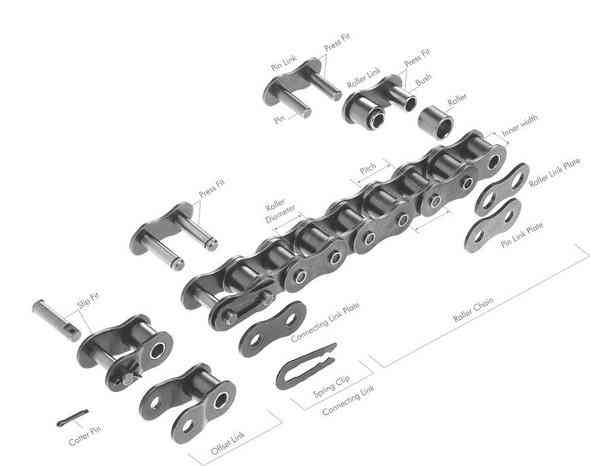
As the name suggests, a roller chain has 5 basic components: pins, bushings, rollers, and pin chainplates. These components are precision engineered to ensure optimum performance and durability. Typical applications include drives and conveyor belts. The various components of the roller chain can be customized to specific needs. Read on to learn more about how these parts work together. This article presents the advantages and disadvantages of different types of roller chains and discusses their applications.
A roller chain is a form of chain drive consisting of short cylindrical rollers connected together by side links and gears called sprockets. While these devices are simple, they have some limitations. In most cases, sprockets must be designed with a maximum tensile load on one tooth to prevent premature chain failure. Therefore, these chains are less efficient than belt drives with higher inertia.
Roller chains are usually made of carbon or alloy steel, although stainless steel is often used where food processing machinery and lubrication are problematic. Sometimes, nylon and brass are used. The maximum running speed of the roller chain is important for some applications, but it also provides economic benefits for users and manufacturers. The maximum running speed of a roller chain is usually governed by a wear limit, which can vary by application.
The global roller chain market is expected to grow at a CAGR of over 5.4% over the next six years. The research report covers the competitive landscape and key factors influencing the market. The report also analyzes the growth potential, product utilization, and pricing models of key vendors. It also covers the SWOT analysis of the key players in the industry. The study provides a comprehensive market analysis of all these factors and more. It also highlights key players and their strategies and identifies the fastest growing regions for their products and services.
Maintain
Because rollers are exposed to a variety of environments, including snow, rain, and muddy roads, regular maintenance is required to prevent damage. Because they must encounter these elements frequently, frequent inspections are important to prevent rust and other damage. Also, avoid pouring acidic or alkaline cleaning products on the roller chain. Instead, use hot water with hand sanitizer or a disposable toothbrush to clean the rollers. Washing the chain directly with water has little effect.
For small rollers, the workload during the break-in period should not be too large, otherwise, it will cause overheating. The small drum should also be inspected frequently for any unusual appearance, which may indicate that the system is not functioning properly. In this case, the operation must be suspended. Failure to do so could result in serious injury or a facility fire. Additionally, a properly lubricated roller chain is essential to ensure long-term performance.
The surface of the roller is often rusted and scratched. Over time, these little scars can spread to the drive, damaging it. Also, the chain may not be properly spaced and timed. Therefore, it is very important to check regularly to ensure that the chain is in top condition. When the chain wears to 3% or more, the entire roller chain needs to be replaced. Failure to do so may damage the drive, the roller sprocket, or the entire chain.
Given the chain’s processing environment, lubrication is critical to its performance. If the chain is lubricated, it must be re-lubricated frequently. However, lubricated roller chains are susceptible to contamination, especially in the biomass industry. In these environments, airborne organic particles and debris from the biomass industry can contaminate lubricated roller chains. This is why maintenance is important for lubricating roller chains.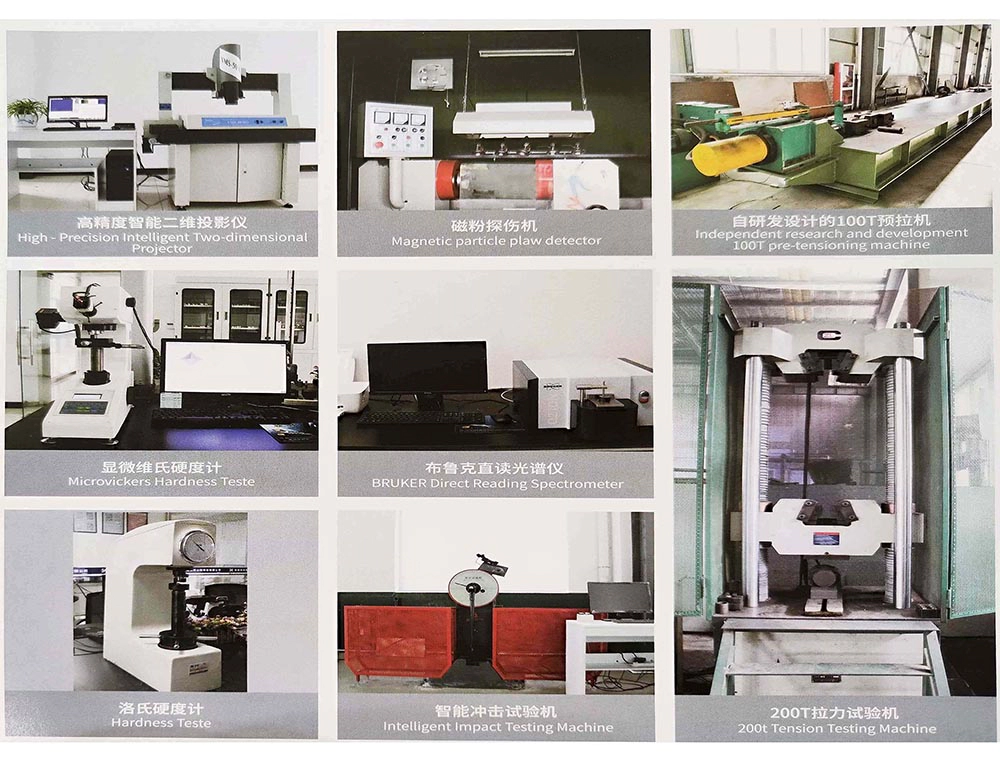
Preloading
The benefits of preloading roller chains are well documented. In general, preloading eliminates the initial elongation of the roller chain, increasing its service life. Preloading is an effective way to achieve this, and a preloading chart can help illustrate the benefits of this process. Chains with little or no preload will stretch significantly during drive start, while chains will stretch rapidly as the surface hardness of the wear parts increases. Additionally, a properly preloaded chain has little or no elongation during the initial start-up of the drive, extending wear life.
Premium manufacturers apply the preload concept during their production phase, aligning all major components at the same time. This approach helps eliminate elongation issues that lead to rapid degradation of the roller chain. If this is not checked, the chain drive will stretch immediately over time. To avoid these problems, it is important to purchase a high-quality preloaded roller chain from a reputable source.
The heat treatment process is an effective way to prevent excessive wear of the roller chain. Heat treatment is a complex process that takes place in a factory during manufacturing. This process helps the rollers maintain high hardness and depth, preventing breakage. When buying a roller chain, make sure that the chain is heat treated and that the chain is manufactured to a high degree of precision. It also ensures that the product can be used for a long time.
In addition to performance benefits, preloading can also reduce initial elongation. A preloaded roller chain will exhibit near linear elongation, whereas a non-preloaded chain will experience rapid elongation. Therefore, they will reach the recommended 3% elongation earlier. Make sure the chain is properly lubricated. Also, consider how the chain is arranged. This is critical for optimal longevity.
editor by CX 2023-06-13
China best High Quality Seal Precious Roller Chain Heat Resistant Chc Conveyor Chain elite roller chain
Product Description
CZPT rollers enhance rotation on the bushing while reducing impact loads on the sprocket tooth during operation.
All components are heat treated to achieve maximum strength.
Pre-loaded during the manufacturing process to minimize initial elongation.
Hot dipped lubrication ensures 100% lubrication of all chain components to extend wear life and reduce maintenance costs.
| ANSI NO. |
PITCH | BUSH WIDTH |
ROLLER DIA |
PIN | PLATE | ULTIMATE TENSILE STRENGTH |
WEIGHT | |||
| D | L | Lc | T | H | ||||||
| mm | mm | mm | mm | mm | mm | mm | mm | KN/min | kg/m | |
| 428H-OR | 12.700 | 7.75 | 8.51 | 4.45 | 22.80 | 23.90 | 2.03 | 11.81 | 23.00 | 0.95 |
| 520H-OR | 15.875 | 6.25 | 10.16 | 5.09 | 22.00 | 23.20 | 2.42 | 15.09 | 21.80 | 1.30 |
| 50-OR | 15.875 | 9.40 | 10.16 | 5.09 | 24.80 | 26.00 | 2.03 | 15.09 | 21.80 | 1.15 |
| 60-OR | 19.050 | 12.57 | 11.91 | 5.94 | 30.40 | 31.90 | 2.42 | 18.08 | 31.10 | 1.66 |
| 80-OR | 25.400 | 15.75 | 15.88 | 7.94 | 35.50 | 37.00 | 3.25 | 24.13 | 55.60 | 2.95 |
| Usage: | Transmission Chain, Conveyor Chain, Dedicated Special Chain, Roller Chain |
|---|---|
| Material: | Alloy/Carbon Steel |
| Surface Treatment: | Polishing |
| Feature: | Heat Resistant |
| Chain Size: | 1/2"*1" |
| Structure: | Roller Chain |
| Samples: |
US$ 10/Meter
1 Meter(Min.Order) | |
|---|
| Customization: |
Available
| Customized Request |
|---|
What to look for in a roller chain
There are many different factors to consider when purchasing a roller chain. One of the most important factors is tensile strength, which represents the force required to break the chain. Roller chains are available in three different tensile strengths: minimum, average and ultimate. Each strength reflects a different limit to the load the chain can handle. However, these limits are not always equal and you should be aware of the differences between roller chains.
Canonical chain
Most roller chains have standard sizes printed on the side panels. This is usually “40” or “C2080H”, but can also be the letter “B”. If the chain is old, it will need to be cleaned to see its size. You can find the size on the standard roller chain size chart, but not everyone is marked. To determine the size, measure the diameter and pitch of the chain, then compare the results to the chart to see what size you need.
Heavy-duty roller chains are available with heat-treated pins, side plates, and rollers. In addition to being heat treated, they are also factory pre-stretched, which reduces wear on these parts. If properly maintained, they can last for years, reducing the risk of failure or corrosion. Depending on the application, standard roller chains are available in different sizes. It can be purchased separately. There are several options to choose from, depending on the size and strength of the application.
PEER roller chains contain solid rollers to reduce shock loads on the sprocket teeth. Heat treating and preloading all components of the PEER chain helps minimize initial elongation. Hot-dip lubrication ensures complete lubrication of all chain components, extending their life and reducing maintenance costs. For heavy-duty applications, ASME/ANSI-B29.1 chain is a good choice.
Standard roller chains are made of steel or alloy steel. However, it can be made of other materials such as stainless steel. In addition to steel, stainless steel is often used in food processing machinery where chain lubrication is an issue. Brass and nylon are also sometimes used. However, they are not that popular. Therefore, you should always check with your supplier before purchasing. By comparing the tensile strength of two different chains and making an informed decision, you can get the best price and service.
Chain without bushing
Bushless roller chains have advantages over conventional roller chains. Unlike conventional chains, bushless chains have extensive lateral flexibility, which increases the chain’s lubrication flow. The inner plates of bushless chains have protruding shoulders so the oil can flow through them more easily and efficiently. This is an important characteristic of a smooth-running chain. Additionally, bushless chains may have improved shifting performance.
The strength of a bushingless roller chain is measured in terms of tensile strength and fatigue strength. The former measures the load a chain can withstand before breaking. Fatigue strength is equally important, and factors that affect fatigue strength include the steel used to make the chain components, the pitch hole fabrication, the type of shot peening on the chain, and the design and thickness of the chain. For example, if the chain is too thin, it may not be enough for heavy-duty applications.
Like traditional roller chains, bushingless roller chains have two different types of links. The inner link has two inner plates connected by pins, while the outer chain has two outer plates held together by bushings. A bushingless roller chain is similar to a traditional chain, except it eliminates a step in the assembly process by stamping the tube into the inner plate. So if you want a smoother ride, a bushingless roller chain is a better choice.
There are two different sizes of bushingless roller chains. One size is designed for use with standard single-strand chains, while the other size is designed for use with double-strand or triple-strand chains. Bushless chains are generally shorter than conventional chains, so they can fit in tighter spaces. Bushless chains are made of the highest quality materials. These chain attachments are case hardened for optimum strength and durability.
Mute chain
The silent roller chain has a smooth, low-noise drive. They are made of stacked rows of flat chainplates with a gear-like profile that meshes with the sprocket teeth. Each chainplate is attached to a corresponding sprocket, which also allows the chain to bend. While these basic components are the same for every silent roller chain, there are many variations that allow them to be used in a variety of applications.
The most popular high-speed transmission, silent chains feature gear-like sprockets. They can be made from single or multiple strands of material. Single-strand chains are less expensive than multi-strand chains, but they tend to wear out faster if not lubricated. Single-strand roller chains can be used for years without lubrication, but for your application, wide silent chains are still worth considering.
The design and construction of silent chains make them ideal for conveying a wide variety of products. They have flat, heat-resistant surfaces. They are also durable and non-slip. They are available in a variety of pitch sizes, widths, and mounting styles. Whether you need chains for general purpose conveyors or glass bottle transport applications, we have you covered. Ask about the benefits of silent roller chain conveyors.
Inverted tooth chains are another option for quieter chains. These chains are designed to reduce noise from engine-related friction. Silent chains are more common, and manufacturers have fallen in love with them. A silent chain consists of several links connected to the sprocket teeth. Teeth rotate to reduce noise, vibration, and chord action. These are the main reasons why silent chains are so popular.
ANSI chain pitch
To measure your bike’s chain pitch, you can use a caliper. This measurement is taken from the center of the rolling pin to the center of the next rolling pin. Chains come in many sizes, but ANSI is the most common chain standard in the United States. A caliper is handy if you’re not sure which size to buy, as it allows you to check for worn sprockets.
Chains that meet ANSI standards will be characterized by a certain pitch. This measurement is based on the width and spacing of the roll. The spacing is usually greater than the width. The standard number will be the right number for the width of the chain or the left number for the rollers. The number on the left indicates whether the chain is lightweight or heavyweight. Heavyweight chains are designated by the suffix “H”.
Common chain sizes are based on ANSI chain pitch. Pitch is the minimum distance between bushing and sprocket. The smaller the chain pitch, the greater the total distance between the two points. This means the chain will last longer. However, if you are buying a chain for a specific application, you should check the pitch carefully as it can affect the performance of the chain.
Roller chain wear measurement
The purpose of roller chain wear measurement is to prevent breakage by monitoring the strain on the chain. There are several ways to measure roller chain wear. The first is to remove the chain from its working position and measure the distance from the sprocket to its measuring end. Another way is to measure the pitch of the chain or the distance between two pins. This method is superior to other methods because it is convenient and accurate.
When measuring the wear of a roller chain, it is important to note that the elements of the chain will gradually deform. About 3.75% of the total wear will be on the pins and the rest will be on the internal links. These wear measurements will vary based on the nominal pitch of the chain and the amount of friction the chain is experiencing. Proper lubrication between pins and bushings, load and frequency of articulation all affect wear rates.
It is important to measure the amount of wear on the roller chain to avoid excessive machine failures. The longer the chain runs, the more wear it will wear. Although the length of the chain should be less than the center distance, the excessive load will cause premature wear. Therefore, lubrication is essential. Additionally, the sag of the chain should not exceed 2% to 4% of its center-to-center distance. Finally, check for unusual noise or visible defects. A common cause of excessive roller chain wear is the size of the load. Every chain manufacturer sets a maximum workload for its product.
There are several ways to measure roller chain wear. If using a high-speed drive, it should have at least 11 teeth, and a medium-speed drive should have at least 25 teeth. Also, be sure to check the length of the chain, even if you should. The same goes for the pin diameter, which should be the same or different pitch as the roller chain.
editor by CX 2023-05-19
China Best Sales High Quality Seal Precious Roller Chain Heat Resistant Chc Conveyor Chain pin bush chain
Product Description
CZPT rollers enhance rotation on the bushing while reducing impact loads on the sprocket tooth during operation.
All components are heat treated to achieve maximum strength.
Pre-loaded during the manufacturing process to minimize initial elongation.
Hot dipped lubrication ensures 100% lubrication of all chain components to extend wear life and reduce maintenance costs.
| ANSI NO. |
PITCH | BUSH WIDTH |
ROLLER DIA |
PIN | PLATE | ULTIMATE TENSILE STRENGTH |
WEIGHT | |||
| D | L | Lc | T | H | ||||||
| mm | mm | mm | mm | mm | mm | mm | mm | KN/min | kg/m | |
| 428H-OR | 12.700 | 7.75 | 8.51 | 4.45 | 22.80 | 23.90 | 2.03 | 11.81 | 23.00 | 0.95 |
| 520H-OR | 15.875 | 6.25 | 10.16 | 5.09 | 22.00 | 23.20 | 2.42 | 15.09 | 21.80 | 1.30 |
| 50-OR | 15.875 | 9.40 | 10.16 | 5.09 | 24.80 | 26.00 | 2.03 | 15.09 | 21.80 | 1.15 |
| 60-OR | 19.050 | 12.57 | 11.91 | 5.94 | 30.40 | 31.90 | 2.42 | 18.08 | 31.10 | 1.66 |
| 80-OR | 25.400 | 15.75 | 15.88 | 7.94 | 35.50 | 37.00 | 3.25 | 24.13 | 55.60 | 2.95 |
| Usage: | Transmission Chain, Conveyor Chain, Dedicated Special Chain, Roller Chain |
|---|---|
| Material: | Alloy/Carbon Steel |
| Surface Treatment: | Polishing |
| Feature: | Heat Resistant |
| Chain Size: | 1/2"*1" |
| Structure: | Roller Chain |
| Samples: |
US$ 10/Meter
1 Meter(Min.Order) | |
|---|
| Customization: |
Available
| Customized Request |
|---|
What is a roller chain?
What is a roller chain? A roller chain is a transmission system that transmits power from one shaft to another. Internal lubricant helps chains last longer and are interchangeable. Chains are usually made of carbon or alloy steel. Stainless steel is sometimes used in food processing machinery or in environments where lubrication is problematic. Brass and nylon are also sometimes used. If you need to slow down the machine, nylon chains can be used.
Roller chains are used to transmit power from one shaft to another
Generally speaking, the life of a roller chain is limited by three main factors: wear, corrosion, and fatigue. These can be minimized by following some simple guidelines. For optimum performance, the roller chain must be lubricated. Proper lubrication reduces friction and extends product life. Remember that corrosion and wind resistance can adversely affect lubrication, so protect the product properly.
A chain is a mechanical device used to transmit power from one shaft to another. The chain consists of a series of steel plates called bushings. Bushings are attached to the roller chain by pins or bushings. The block and bushing are held together by pins or bushings C riveted to the outer link D. The chain is also attached to the sprocket and bucket by pins or hooks. Chain pitch is measured between hinge centers, usually denoted p.
There are three types of chains: single-strand standard series, multi-strand standard series, and silent chain. Single strand chains are the most common type and cover a wide range of drive loads. Multi-strand chains provide greater power capacity without increasing chain pitch or line speed. An inverted tooth chain is a variant of a single-strand chain that eliminates the noise caused by pitch-related friction.
The inner and outer plates of the roller chain drive are made of steel. The rollers are positioned evenly between the chain links and are fastened to the sprockets. In addition, the rollers can rotate freely within the bushing. The chain links are arc-shaped and mesh with the sprocket teeth to transmit power through the chain.
Chain drives are another common way of transmitting mechanical power. These are the simplest forms of power transmission and are used on conveyor belts and other low-speed applications. The chain wraps around the sprocket and passes through the sprocket whose teeth mesh with the links. This mechanism transfers mechanical power from one shaft to another, increasing speed.
They are interchangeable
There are many different types of roller chains, but most are made of steel. Although they have their own advantages and features, they are generally interchangeable. You can buy different kinds of roller chains from domestic and foreign manufacturers, and you can choose the one that best suits your needs. Bearing Services can help you choose the right bearing for your application needs and budget. Here are some important things to consider before buying a roller chain. Here are some tips to make it easier for you to buy the right type of chain.
When choosing the right roller chain, be sure to consult the available size charts. Depends on how much chain you need to move the load you need to move. Remember that roller chains can be manufactured to fit a variety of machines and must meet your specific needs. Also, the chain should be long enough for the machine you are using. Make sure to buy a chain made of high-quality materials.
Double pitch roller chains have a flat top surface and are used in many different conveying applications. Double-pitch load-carrying roller chains, also known as oversized roller double-pitch chains, have rollers that extend beyond the sidebars to carry products. Double pitch drive series roller chains are used in elevators, long conveyor drives, agricultural machinery, and commercial sprinkler systems.
The tensile strength of a roller chain is a key factor to consider before purchasing a chain. The tensile strength of a chain is a function of the maximum force the chain can withstand before breaking. The three different types of tensile strength represent the force a chain can withstand without breaking. Each chain also has different strengths that can determine the type of chain you need.
The outer and inner links of the roller chain are designed for bearings. This allows the chain to be paired or unpaired with its internal links. The outer link has a pin, and the inner and outer pins are press-fit into the connecting plate. These links are usually made of steel and have a tensile strength of about 20 times their weight. The fatigue strength of two-pitch offset links is the same as that of the base chain.
They reduce wear with internal lubricants
In a roller chain, the pins and bushings rotate inside the chain without lubricant on the outside. They are in contact with the teeth of the sprocket and can easily wear out if not lubricated. The plates that connect the links and pivot about the pins can also rub against each other and cause wear. This is where lubricants come in handy. Without lubricant, the bare metal of the plate and bushing would rub against each other.
The lubricant should have the appropriate viscosity to penetrate critical internal surfaces and form an effective oil film. Recommended viscosities are listed in Table 1. Lubricants must be clean and non-corrosive. For roller chains, a good quality non-clean petroleum base oil is sufficient. While defoamers are not required, other additives such as antioxidants and extreme pressure inhibitors may be useful. However, impure oils should be avoided due to the risk of damage.
The shape of the spray head 10 overlaps with a conventional drive chain 12. The drive chain includes a plurality of rollers 24 and roller link plates 26. Each roller includes a roller pin 29 and is connected to a pair of pin link plates 28. Most drive chains have critical wear points on the sides of the roller pins 29. The shape of the spray head 10 prevents overspray onto the central portion of the roller.
In addition to preventing wear, these chains have unique specifications. Manufacturer CZPT requires raw material suppliers to certify that their products meet standards set by the American Society of Mechanical Engineers (ASME). CZPTs do not accept uncertified raw materials. For safety, the machine must be turned off before attempting to measure the chain. After the system is shut down, the measurement process should be completed in accordance with safety procedures.
General spray oil has lubricating properties, but is not as good as other types of chain lubricants. These are typically used for rust protection and include antioxidant chemicals. Generally, they are inexpensive and widely available in retail stores. However, they have the disadvantage of being very penetrating and difficult to apply evenly. Oil cannot stay on the chain as it spins, which can accelerate wear and corrosion.
They can be used to speed up or slow down machines
Typically, roller chains are chains used to move mechanical system components. Unlike belts, roller chains can be used to speed up or slow down a machine. The main difference between belts and roller chains is the lubrication process. Belts use lubrication to help them move at a constant speed, but should not exceed the critical speed of the roller chain. This critical speed is not easy to determine and lubrication is critical to its life.
A roller chain is a chain consisting of a steel bushing that holds the inner plate A and pins C together. Pin C is riveted to outer link D, while roller R surrounds each bushing B. The teeth of the sprocket are supported on the rollers. They spin freely on pins and bushings, reducing friction.
The chains can be single-stranded, double-stranded, or multi-stranded. The rated power capacity of the single strand chain can meet various drive load requirements. Multi-strand chains provide higher power capacity without increasing chain pitch or line speed. The silent chain, also known as the inverted tooth chain, consists of a series of toothed chainplates. The pins of the chain are pressed into the wide ends of the sidebars and outer links.
Although roller chains are a common mechanical component, they can fail under certain conditions. The most common cause of excessive wear is wrong to load sizing. Each manufacturer sets a maximum workload for its product. A chain that is too small for the load carried will not run smoothly and may cause premature failure. Chains can also fail due to rust or improper maintenance.
There are many ways to choose the correct size roller chain. The easiest way to choose the right one is to use a horsepower chart to determine the speed of the motor. RPM will determine the size of the chain and the number of teeth on the drive sprocket. Conveyor chains offer a variety of options to move products horizontally or vertically, even around bend radii.
editor by CX 2023-05-18
China Best Sales ISO 9001 Approved motorcycle part sprocket Stainless Steel Agricultural Transmission Roller conveyor Chain bush chain for sale
Product Description
ISO 9001 Approved Agricultural Chain
Why choose us ?
1. HangZhou Xihu (West Lake) Dis.hua Chain Group Co., Ltd established in 1991, we have 5 subsidiaries in china and also have 6 subsidiaries abroad;
2. we covering a production area of 200,100 square meters, have more than 1,800 sets of advanced equipment and over 3,100 highly skilled employees, the annual production capacity has exceeded 20,000,000 meters;
3. we specialized in producing all kinds of standard chains and special chains, such as A or B series chains, drive chains, conveyor chains, drag chains, agricultural chains, sprockets, gears and so on;
4. we have obtained ISO9001, ISO14001, ISO16969, AAA and API certificates.
5. Our partners among world top enterprises, such as JOHNDEERE, NEW HOLLAND, CLAAS, HONDA, KUBOTA, YANMAR, etc.
Our agricultural chains are as following items:
1. SH series high strength heavy duty short pitch roller chains
2. SP series high strength heavy duty short pitch roller chains
3. Walking tractor chains
4. Combine chains
5. ZGS38 combine chain with attachments
6. Rice harvester chains
7. Various agricultural chain with attachments
8. S type steel agricultural chains
9. S type steel agricultural chain with attachments
10. A Type steel agricultural chains
11. CA type steel agricultural chains
12. C type steel agricultural chain with attachments
13. Special agricultural chain with attachments
1) Related Products
2) Certificates
HangZhou Xihu (West Lake) Dis.hua Chain Group Co., Ltd was founded in 1 9 9 1, and now it has five wholly owned subsidiaries, one in ZheJiang province, other four in HangZhou, ZHangZhoug province, it is a professional manufacturer of chains, sprockets, tooth gears and various power transmission products.
The group has XIHU (WEST LAKE) DIS.HUA, ZIQIANG brands, is focused on producing all variety of standard roller chains and special chains, such as conveyor chain, stainless steel chain, agricultural chain. With Xihu (West Lake) Dis.hua brand registered in more than 70 countries like America, Europe, Japan, it is building long term cooperation with these world top enterprises, such as JOHNDEERE, NEW HOLLAND, CLAAS, HONDA, KUBOTA, YANMAR.
There is a technical center of province level, Xihu (West Lake) Dis.hua academician working station, experiment station for Xihu (West Lake) Dis.hua post doctors, and national hundreds of program set up in Xihu (West Lake) Dis.hua group. With these platforms and strong technical ability, the more than hundreds of Engineers and technicians have developed all variety of special high precise and high strength products, conducted mold programs for key components in the car and national industry revitalizing program.
Great attention has been paid on environmental protection and energy saving. The product well displays environmental protection and energy saving. In the year of 2 0 0 0, Xihu (West Lake) Dis.hua took the lead in gaining I S O 1 4 0 0 1 environment management certificate and thereafter passed the inspection of clean production and recycling economy, winning the title of “ZHangZhoug Green Enterprise”.
“We are always serving our customers with our best products.”
| Usage: | Transmission Chain |
|---|---|
| Material: | Alloy/Carbon Steel |
| Surface Treatment: | Oil Blooming |
| Feature: | Heat Resistant |
| Chain Size: | 1/2"*11/128" |
| Structure: | Roller Chain |
| Customization: |
Available
| Customized Request |
|---|
Types of roller chains and their applications
There are many factors that can cause premature wear of the roller chain. They include friction, external shocks, and lack of lubrication or adjustment. Here are some tips to help you prevent premature chain wear. Read on to learn more about the different types of roller chains and their applications. You’ll be surprised how quickly the roller chain wears out! Below we have listed some of the most common causes of premature roller chain wear.
Double strand heavy-duty roller chain
If your application requires a heavy-duty chain, a double-strand steel roller chain is an excellent choice. Double-strand steel roller chains are manufactured to reduce stress fatigue and stretch, making them ideal for industrial and logging equipment. This type of chain is also heat-treated and shot-peened for excellent fatigue resistance and strength. Listed below are some of the advantages of double-strand heavy-duty roller chains.
When comparing single-strand and double-strand heavy-duty roller chains, double-strand steel roller chains are generally better. They have twice as many side plates and a working load close to that of a twin-strand steel roller chain. Unlike single-strand steel roller chains, double-strand roller chains are not interchangeable with standard double-sprockets. They use sprockets specially made for double chains.
Double strand chains are particularly strong, resistant to rust and corrosion, and ideal for high-stress applications. They are commonly used in conveyor systems, paper mill equipment, ditches, lifts, seed drills, and various hoisting machinery. They are also used in the wastewater and food processing industries. Chains of this type are used on conveyor lines, so they are an excellent choice for heavy machinery.
Nickel-plated chain
Nickel-plated roller chains are ideal for outdoor work, mildly corrosive environments, and applications requiring a good chain appearance. Nickel plating increases component hardness and improves wear resistance while ensuring that all surfaces are protected. The benefits of nickel-plated roller chains include increased durability, corrosion resistance, and a bright shine. Here are a few reasons to use such a chain. All chains are manufactured to the highest quality and safety standards.
Although slightly corrosive, nickel-plated roller chains are ideal for applications in high salt and high humidity environments. However, nickel plating can peel and chip, so nickel roller chains are not recommended for use in food processing or other environments exposed to corrosive substances. ANSI B29.1 standard chain can be nickel-plated and is ideal for a variety of applications including industrial garage doors and boat lifts.
CZPT USA Corp. is committed to being the premier agricultural and industrial chain supplier in the United States. By focusing on quality, they ensure their chains provide long life and unmatched wear resistance. If you’re looking for a quality plated roller chain, consider choosing a chain from a leading manufacturer. If you need the durability and strength of a nickel roller chain, choose CZPT USA Corp. We manufacture the highest quality chains in the USA.
In addition to high strength, nickel-plated roller chains are also available in elastomer profiles. These types of chains can handle 1/2 to 3/4″ loads, depending on their pitch. They are also ideal for gentle traction on sensitive surfaces. The strength of these chains depends on the type of the main link used in the chain. Nickel-plated roller chains are available in a variety of sizes and are priced to suit a variety of applications.
Stainless steel chain
Stainless steel roller chains are ideal for industrial applications in two harsh environments. They have excellent chemical and corrosion resistance, as well as high strength. Chains are available in three grades to meet various operational needs. 304SS is suitable for food contact applications, while 316SS and 606SS offer excellent corrosion resistance. 600 series stainless steel provides excellent corrosion and wears resistance with precipitation hardened components.
In food processing, stainless steel chains are often exposed to extremely high temperatures and high concentrations of acids, alkalis, and water. They are also resistant to high concentrations of acid and chlorine. And their low magnetic permeability allows them to function properly in hygienic conditions. But stainless steel roller chains also have some disadvantages. Despite their excellent corrosion resistance, these chains are not recommended for use in food processing environments.
Compared to carbon steel, stainless steel roller chains are softer and hold longer. This means it may wear out faster. Since stainless steel is not heat-treated, its surface hardness is different from carbon steel. It retains heat for longer, reducing its tensile strength and extending its lifespan. Nonetheless, stainless steel roller chains are ideal for a variety of industrial applications.
The stainless steel roller chain is made of high-quality material. For example, the Premier series stainless steel roller chains are manufactured in Japan using a special type of stainless steel shot peening process. They also feature a solid roller design that reduces side flex. The Premier range also features highly polished side panels and is available in 10′ boxes, 50′ reels, and 100′ reels. They can also be cut to length if necessary.
Accumulation conveyor
Roller chain accumulation conveyors are designed to transport loads up to 440 lbs or 200 kg. The accumulator chain is located on large idler rollers to ensure quiet operation and the minimum force required to hold the pallet. They are suitable for various applications and can be integrated into the entire processing system. These conveyor belts have T-slots on three sides of the profile frame for connecting brackets and sensors.
Sensors installed in the accumulation area detect objects on the conveyor line and send signals to the motors that power the accumulation area. The motor can be external or built into the drum itself. Other types of sensors use light, such as photosensors. Photoelectric sensors detect objects by emitting and receiving specific wavelengths of light. This option is cost-effective because the sensor rollers are located slightly above the surface of the conveyor line.
Roller chain accumulation conveyors can be constructed of steel or plastic rollers. It can be equipped with staggered or coaxial rollers. Safety cover prevents accidental insertion of fingers into the chain, improving operator safety. The safety cover is compatible with the chain type and required bend radius. These caps are made of plastic clips that fit permanently on the inner links of the chain. They do not interfere with conveyed goods or workpiece carriers.
There are two basic types of accumulation conveyors: free flow and accumulation. Free-flowing chains allow conveyed objects to slide directly onto the chain while stacking chains allow goods to slide under the chain. Accumulation chains are commonly used in the food and packaging industries and have rollers that support conveyed objects. The free-flowing conveyor system eliminates the risk of damaging objects, as the rollers in the accumulation conveyor are in direct contact with the bottom of the cargo.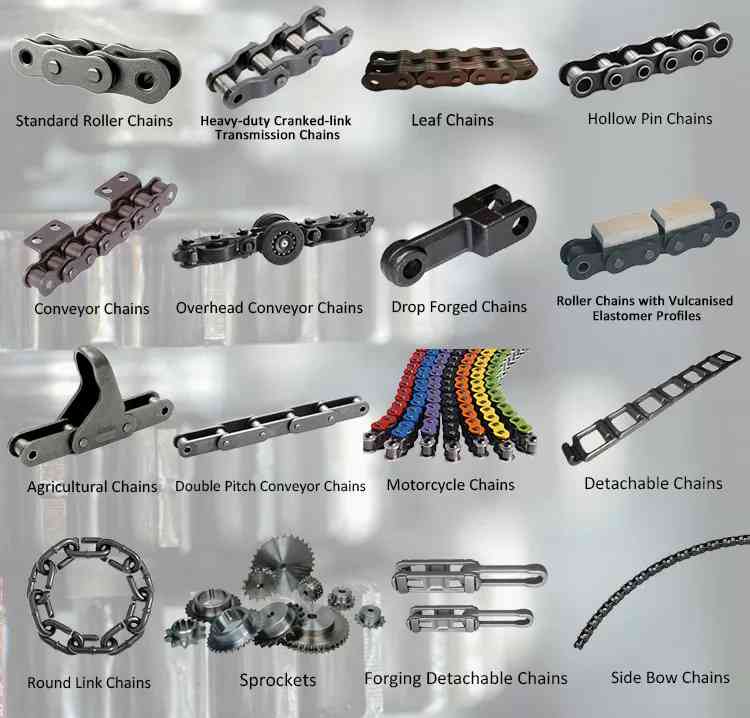
Custom attachment
Standard accessories for roller chains are available in a variety of styles. Typically, they can be assembled on pin or roller links. When referring to connecting chains, it is important to know how to refer to pitch and center-to-center spacing. The pitch of the roller chain should include inner and outer roller links and must alternate every three pitches. Additionally, you can order custom accessories for pin or roller linkages. Below are some examples of custom accessories for roller chains.
Stainless steel roller chains are one of the most well-known chains for this application. It has a stainless steel 304 finish to create curved and straight lugs. For even more flexibility, you can also request custom accessories such as chain plate holes and pins. For added safety, various accessories can be attached to the single-pitch roller chain. It can also be made with multiple pins or curved lugs.
HKK Chains is stocked with much stainless steel and carbon steel standard connecting chains. Most of the time, they can assemble a custom accessory chain in no time. For example, a single-pitch chain with two connecting holes is called a wide profile. Additionally, chains can be manufactured in a variety of materials, including carbon steel, stainless steel, Lambda, plastic, and Ultra WP. In addition, a wide range of unique accessories is available for special industries.
editor by CX 2023-04-21
China 420/428/520/530 O Ring motorcycle parts marine/rigging hardware Motorcycle Conveyor link Roller Chain best lubricant for roller chain
Item Description
Double Pitch Transmission Chains with K1 Attachments -2040k1
A. Our Solutions:
one. Any of your variety inquiry about chain would be replied in 24 hrs.
2. Nicely-qualified and experienced sales staffs will reply all your considerations in fluent English.
three. OEM companies are offered with us, our specialist designer would make your personal thought into getting.
4. Safety of your income area, concepts of layout and all your non-public details.
5. Delivery by air mail or ship for your orders.
six. With years of manufacture and promotion encounter in international market, brings you income and wonderful accomplishment!
B.Technological parameters
C. Organization display & Merchandise Approach
D. Packaging
| Packaging Information: | Chain+Plastic Bag+Neutral Box+Wooden scenario+Large Carton+Metal Pallets |
| Delivery Detail: | five months |
E. FAQ:
1. Are you company or trade Business?
We are a manufacturing facility launched in 1991 with trade group for global services.
two. What conditions of payment you generally use?
T/T thirty% deposit and 70% from doc, Western Union, L/C at sight
3. what is your direct time for your items?
Normally 45 days soon after confirmed buy. 30 days could be available in lower season for some objects (for the duration of May possibly to July), and 65 times throughout new 12 months and hot season ( Jan to March).
four. Do you go to any Show?
We attend Hannover present in Germany, NMW in Austrilia, Canton honest, PTC, in China and several other particular household furniture displays.
| Usage: | Transmission Chain |
|---|---|
| Material: | Alloy/Carbon Steel |
| Surface Treatment: | Oil Blooming |
| Feature: | Heat Resistant |
| Chain Size: | 1/2"*3/32" |
| Structure: | Roller Chain |
| Customization: |
Available
| Customized Request |
|---|
How to choose a roller chain for a conveyor
When choosing a roller chain for your conveyor, the easiest way is to refer to the horsepower and RPM charts. The horsepower and rpm of the small drive sprocket will determine the size and number of teeth of the chain. Conveyor chains are available in a variety of options, including moving products horizontally, vertically, or around a bend radius. When choosing a conveyor chain, consider the purpose of the chain. For example, if you’re delivering products to customers’ doorsteps, you might choose chains that can move products up and down a hallway or warehouse.
Double pitch
Double pitch roller chains are a popular way to drive agricultural equipment. It has twice the pitch of a standard roller chain and is ideal for light-duty drives. Extended pitch increases performance at lower speeds, but requires fewer components per foot than standard single-pitch chains. Compared to single-pitch roller chains, double-pitch chainplates are longer and are suitable for lighter loads. Read on to learn more about double pitch chains and how they can improve your operation.
The most common type of conveyor chain is double pitch. It is used in the auto parts industry, as well as in the precision machinery industry. It is made from the same components as the standard drive roller chain, except it has longer side plates. Double pitch chains are often used on slow-moving conveyors to reduce the stress placed on them. Industries that commonly use double pitch conveyor chains include airport equipment manufacturers, lumber mills, and fruit packing plants.
RS series roller chains are manufactured from high-quality stainless steel. It has excellent chemical and abrasion resistance and is available in a variety of cord lengths. RS sprockets have over 30 teeth. They contain all the necessary connection links for easy installation. PEER Chain offers double pitch roller chain attachments including pre-stretched chains, sprockets, and other attachments.
Double pitch roller chains have several advantages over standard chains. Double pitch chains have double the pitch, making them ideal for conveying applications such as conveyors. In addition to that, it also provides ANSI-compliant styles. These chains also have free connection links. When shopping for a double pitch roller chain, be sure to choose the one that fits your requirements and budget. They will last longer and save you money in the long run.
Double pitch roller chains to ANSI standards feature oversized rollers. These chains are best suited for applications where the product is mounted on top of the chain. They are ideal for agricultural applications where cotton is on top of the drum. Also, this type of chain is used in light-duty conveyors and agricultural applications. You can find double pitch roller chains in a variety of sizes and styles. And, as long as you know what you want, you’ll be happy with the results.
Self-lubricating
Self-lubricating roller chains eliminate the need for manual relubrication, providing long-lasting operation and reducing maintenance costs. These chains are particularly popular in industries such as the food and beverage industry, textiles, printing, and sawmills. They can also replace standard roller chain drives and conveyor chains. Manufactured to the specific standard ISO R606, these chains are ideal replacements for conventional chains. PC chains are particularly beneficial for food and beverage production and packaging applications due to their anti-corrosion properties.
Self-lubricating roller chains meet ISO, ASME/ANSI, and DIN standards. They are interchangeable with standard chains of the same size and shape and can be used in a variety of industrial applications. Self-lubricating chains have special oil-impregnated sleeves to reduce maintenance time. These chains are also suitable for applications where cleanliness is an issue.
Self-lubricating roller chains are manufactured with unique RS attachments. Rather than a traditional roller chain with an external lubricating ring, this type of chain retains the lubricant within its bushings. During operation, the application generates heat, heating the lubricant, which flows out of the pin and bushing area. Therefore, CZPT roller chains are ideal for certain food conveying applications.
In addition to self-lubricating roller chains, carbon steel, stainless steel or nickel-plated steel are also available. Self-lubricating roller chains are available in different sizes depending on the application, including 0.375″ wide profile straight-chain, extended pin chain, and four-link. In addition, these chains are also available in ANSI and BS chain specifications.
Accumulation
Whether you need to move large or small loads, accumulating roller chains are a viable solution. This chain conveyor is designed with low back pressure to transport large and bulky items with minimal noise. Free-running rollers within the chain help create a smooth build-up surface. These chains are available in a variety of options, including accumulating rollers of different pitches.
The accumulation and release roller chain 14 includes an upper part 15 and a lower part 16. The upper part 15 rests in the upper subspace 28, while the lower part 16 rests on the top side 20 of the profile. As the upper belt 15 rolls around the accumulation roller chain 14, it aligns with the lower chain 16 to form a continuous receiving space. This arrangement allows the accumulation roller chain 14 to rest on the top surface of the support profile 11.
A cumulative roller chain consists of many individual parts. Each section of the chain has an elongated cylindrical shape and is connected to each other by hinged joints. Each chain section also has an accumulation and release roller associated therewith. Each roller protrudes from the upper side 20 and the lower side 21 of the chain portion. The accumulation rollers are movable about an axis 22 extending transversely to the longitudinal axis of the chain.
A feature of the stacking and releasing roller chain is its simplicity. The conveyor has a profiled section that is permanently divided into two cross-sectional spaces. The bottom space is closed from all sides. The upper space accommodates the conveyor line. The contoured portion includes an opening that guides the bottom strap. A shunt can also be inserted between the two sections. The accumulating roller chain system is a convenient and versatile way to move bulky items.
There are many different types of accumulating roller chains. Some chains have offset rollers for optimal load distribution. Others have protection to prevent machine wear. Some run without lubricant, which is a safety advantage. In addition to protection, cumulative chains can also provide protection. The side bow version of the accumulation and release roller chain with offset accumulation and release rollers is designed for conveyor systems with very small bend radii.
Without bushing
Bushless roller chains are the most common type of industrial chain. They are simple in design and require only regular maintenance. Regular maintenance includes lubricating, assessing wear, and replacing worn sprockets. For more information, please read the following information:
The outer chainplates and the inner chain plates are alternately arranged in pairs. The connecting pin extends through the hole in the inner link plate. The rollers thus positioned can be rotated on the connecting pins. Oil provided between the outer circumferential surfaces of each connecting pin serves to lubricate the chain. This system reduces noise and wears caused by collisions between inner chain plates and sprockets.
Compared to traditional roller chains, bushings roller chains have rollers around the bushing. These rollers are in rolling contact with the sprocket teeth, providing low friction and excellent wear resistance. To ensure smooth operation, bushings roller chains must be greased to prevent rust and keep the chain properly tensioned. Lubricated chains run smoother and last longer.
In a bushingless chain, the inner links are shaped like half bushings and ride on the rollers. The pins go through the outer plate and connect the inner links to the rollers. The outer plates overlap the inner links and open the pins. This system is also known as a heterochain. This type of chain is more common than traditional roller chains. If you are not sure which type of bushingless roller chain to choose, you may need to purchase an additional pair of inner chainplates.
Linerless roller chains may also include chain guides. In a bushingless roller chain, the outer and inner link plates conform to the surfaces of the guide rails. Thus, the large area of contact between the chain and the guide rail is eliminated, the friction loss is reduced, and the power transmission efficiency is improved. These properties make bushless roller chains more efficient and durable than traditional roller chains. It’s also less noisy. If you are looking for a chain with a lower noise level, a bushingless roller chain may be the right choice for you.
editor by CX 2023-04-12
China best High Quality Low Reasonable Price Modular Conveyor Belt Spiral Machine Plastic Chain Plate with Best Sales
Warranty: 1 year
Applicable Industries: Energy & Mining, Food & Beverage Shops, Other
Customized support: OEM, ODM
Standard or Nonstandard: Standard
Material: Plastic
Tensile Strength: Strong
Product name: Plastic Chain Plate
Color: custom-made
Shape: custom-made
Size: custom-made
Port: ZheJiang Port
Specification product namePlastic Chain Platesizecustom-madeshapecustom-madecolorcustom-made product superioritySmooth conveying surface, smooth operation, and not easy to be disturbed by other materials, can carry heavy weight of materials, durable. According to the specific situation, design and production of appropriate specifications of the chain board Company Profile Packing & Delivery FAQ 1. Who are we?We are based in ZheJiang , China, start from 2004,sell to North America(15.00%),Southern Europe(10.00%),Western Europe(10.00%),Eastern Europe(10.00%),Oceania(10.00%),Domestic Market(5.00%),South Asia(5.00%),Africa(5.00%),Northern Europe(5.00%),Central America(5.00%),Southeast Asia(5.00%),Eastern Asia(5.00%),Mid East(5.00%),South America(5.00%). There are total about 51-100 people in our office.2. How can we guarantee quality?Always a pre-production sample before mass production;Always final Inspection before shipment; Pinion Shaft for Large Machine Transmission Parts 3.What can you buy from us?Filter plate of filter press,Press filter cloth,Polymer sheet,Plastic injection molded parts,Nylon pieces4. Why should you buy from us not from other suppliers?The company integrates design, research and development, production, sales, service and marketing, providing various injection molding products for overseas customers. The company also has advanced production and processing equipment, to ensure the quality5. What services can we provide?Accepted Delivery Terms: FOB,CFR,CIF,EXW,FAS,CIP,FCA,CPT,DEQ,DDP,DDU,Express Delivery,DAF,DES;Accepted Payment Currency:USD,EUR,JPY, HangZhou advance CZPT input speed mechanical diesel engine small boat transmission marine gearbox CAD,AUD,HKD,GBP,CNY,CHF;Accepted Payment Type: T/T,L/C,D/P D/A,MoneyGram,Credit Card,PayPal,Western Union,Cash,Escrow;Language Spoken:English,Chinese,Spanish,Japanese,Portuguese,German,Arabic,French,Russian,Korean,Hindi,Italian
What to look for in a roller chain
There are many different factors to consider when purchasing a roller chain. One of the most important factors is tensile strength, which represents the force required to break the chain. Roller chains are available in three different tensile strengths: minimum, average and ultimate. Each strength reflects a different limit to the load the chain can handle. However, these limits are not always equal and you should be aware of the differences between roller chains.
Canonical chain
Most roller chains have standard sizes printed on the side panels. This is usually “40” or “C2080H”, but can also be the letter “B”. If the chain is old, it will need to be cleaned to see its size. You can find the size on the standard roller chain size chart, but not everyone is marked. To determine the size, measure the diameter and pitch of the chain, then compare the results to the chart to see what size you need.
Heavy-duty roller chains are available with heat-treated pins, side plates, and rollers. In addition to being heat treated, they are also factory pre-stretched, which reduces wear on these parts. If properly maintained, they can last for years, reducing the risk of failure or corrosion. Depending on the application, standard roller chains are available in different sizes. It can be purchased separately. There are several options to choose from, depending on the size and strength of the application.
PEER roller chains contain solid rollers to reduce shock loads on the sprocket teeth. Heat treating and preloading all components of the PEER chain helps minimize initial elongation. Hot-dip lubrication ensures complete lubrication of all chain components, extending their life and reducing maintenance costs. For heavy-duty applications, ASME/ANSI-B29.1 chain is a good choice.
Standard roller chains are made of steel or alloy steel. However, it can be made of other materials such as stainless steel. In addition to steel, stainless steel is often used in food processing machinery where chain lubrication is an issue. Brass and nylon are also sometimes used. However, they are not that popular. Therefore, you should always check with your supplier before purchasing. By comparing the tensile strength of two different chains and making an informed decision, you can get the best price and service.
Chain without bushing
Bushless roller chains have advantages over conventional roller chains. Unlike conventional chains, bushless chains have extensive lateral flexibility, which increases the chain’s lubrication flow. The inner plates of bushless chains have protruding shoulders so the oil can flow through them more easily and efficiently. This is an important characteristic of a smooth-running chain. Additionally, bushless chains may have improved shifting performance.
The strength of a bushingless roller chain is measured in terms of tensile strength and fatigue strength. The former measures the load a chain can withstand before breaking. Fatigue strength is equally important, and factors that affect fatigue strength include the steel used to make the chain components, the pitch hole fabrication, the type of shot peening on the chain, and the design and thickness of the chain. For example, if the chain is too thin, it may not be enough for heavy-duty applications.
Like traditional roller chains, bushingless roller chains have two different types of links. The inner link has two inner plates connected by pins, while the outer chain has two outer plates held together by bushings. A bushingless roller chain is similar to a traditional chain, except it eliminates a step in the assembly process by stamping the tube into the inner plate. So if you want a smoother ride, a bushingless roller chain is a better choice.
There are two different sizes of bushingless roller chains. One size is designed for use with standard single-strand chains, while the other size is designed for use with double-strand or triple-strand chains. Bushless chains are generally shorter than conventional chains, so they can fit in tighter spaces. Bushless chains are made of the highest quality materials. These chain attachments are case hardened for optimum strength and durability.
Mute chain
The silent roller chain has a smooth, low-noise drive. They are made of stacked rows of flat chainplates with a gear-like profile that meshes with the sprocket teeth. Each chainplate is attached to a corresponding sprocket, which also allows the chain to bend. While these basic components are the same for every silent roller chain, there are many variations that allow them to be used in a variety of applications.
The most popular high-speed transmission, silent chains feature gear-like sprockets. They can be made from single or multiple strands of material. Single-strand chains are less expensive than multi-strand chains, but they tend to wear out faster if not lubricated. Single-strand roller chains can be used for years without lubrication, but for your application, wide silent chains are still worth considering.
The design and construction of silent chains make them ideal for conveying a wide variety of products. They have flat, heat-resistant surfaces. They are also durable and non-slip. They are available in a variety of pitch sizes, widths, and mounting styles. Whether you need chains for general purpose conveyors or glass bottle transport applications, we have you covered. Ask about the benefits of silent roller chain conveyors.
Inverted tooth chains are another option for quieter chains. These chains are designed to reduce noise from engine-related friction. Silent chains are more common, and manufacturers have fallen in love with them. A silent chain consists of several links connected to the sprocket teeth. Teeth rotate to reduce noise, vibration, and chord action. These are the main reasons why silent chains are so popular.
ANSI chain pitch
To measure your bike’s chain pitch, you can use a caliper. This measurement is taken from the center of the rolling pin to the center of the next rolling pin. Chains come in many sizes, but ANSI is the most common chain standard in the United States. A caliper is handy if you’re not sure which size to buy, as it allows you to check for worn sprockets.
Chains that meet ANSI standards will be characterized by a certain pitch. This measurement is based on the width and spacing of the roll. The spacing is usually greater than the width. The standard number will be the right number for the width of the chain or the left number for the rollers. The number on the left indicates whether the chain is lightweight or heavyweight. Heavyweight chains are designated by the suffix “H”.
Common chain sizes are based on ANSI chain pitch. Pitch is the minimum distance between bushing and sprocket. The smaller the chain pitch, the greater the total distance between the two points. This means the chain will last longer. However, if you are buying a chain for a specific application, you should check the pitch carefully as it can affect the performance of the chain.
Roller chain wear measurement
The purpose of roller chain wear measurement is to prevent breakage by monitoring the strain on the chain. There are several ways to measure roller chain wear. The first is to remove the chain from its working position and measure the distance from the sprocket to its measuring end. Another way is to measure the pitch of the chain or the distance between two pins. This method is superior to other methods because it is convenient and accurate.
When measuring the wear of a roller chain, it is important to note that the elements of the chain will gradually deform. About 3.75% of the total wear will be on the pins and the rest will be on the internal links. These wear measurements will vary based on the nominal pitch of the chain and the amount of friction the chain is experiencing. Proper lubrication between pins and bushings, load and frequency of articulation all affect wear rates.
It is important to measure the amount of wear on the roller chain to avoid excessive machine failures. The longer the chain runs, the more wear it will wear. Although the length of the chain should be less than the center distance, the excessive load will cause premature wear. Therefore, lubrication is essential. Additionally, the sag of the chain should not exceed 2% to 4% of its center-to-center distance. Finally, check for unusual noise or visible defects. A common cause of excessive roller chain wear is the size of the load. Every chain manufacturer sets a maximum workload for its product.
There are several ways to measure roller chain wear. If using a high-speed drive, it should have at least 11 teeth, and a medium-speed drive should have at least 25 teeth. Also, be sure to check the length of the chain, even if you should. The same goes for the pin diameter, which should be the same or different pitch as the roller chain.
China best BS25-C210A Free Flow Conveyor Double Plus Chain with Free Design Custom
Standard or Nonstandard: Standard
Type: Roller Chain
Material: Carbon steel, Alloy, Stainless Steel
Tensile Strength: Standard
Model Number: BS25-C210A
Product name: Double Plus Chain
Certificate: ISO, ANSI, New Original CZPT or Advance Small Marine Diesel Engine With MB270 Marine Gearbox For Boat DIN, BS
Pitch: 19.05~50.8mm
Surface Treatment: Self-color/Sand-blasted/Shot-peening
Application: Machinery Parts
Service: OEM ODM
Port: Any sea port or airport in China
Packing: Chain+Plastic Bag+ Carton+Wooden case
Color: Self-color, Black, Blue, High Precision Manufacturer Steel Spur Gear Shaft 16 Teeth Cogwheel Shaft Motor Pump Drive Shaft Zinc-plated, Nickel-plated Hollow Pin Chains
Packaging Details: Double Plus Chain: Packaged in boxes and wooden cases, or packaged in reels and then on pallets.
Port: Any sea port or airport in China
Product Image
Item Name
Double Plus Chain
Model
Standard
Service
OEM ODM
Application
Machinery Parts
Surface Treatment
Self-color/sand-blasted/shot-peening
Certification
ISO, ANSI, High rpm gearbox ZDY hard tooth surface gearbox ZDY160 ZDY250 XDY315 DIN, BS
Packing
Packaged in boxes and wooden cases, or packaged in reels and then on pallets.
Port
Any sea port or airport in China
Other Products
Our Company
Packing & Delivery
Our Services
Contact Us
How to choose a roller chain for a conveyor
When choosing a roller chain for your conveyor, the easiest way is to refer to the horsepower and RPM charts. The horsepower and rpm of the small drive sprocket will determine the size and number of teeth of the chain. Conveyor chains are available in a variety of options, including moving products horizontally, vertically, or around a bend radius. When choosing a conveyor chain, consider the purpose of the chain. For example, if you’re delivering products to customers’ doorsteps, you might choose chains that can move products up and down a hallway or warehouse.
Double pitch
Double pitch roller chains are a popular way to drive agricultural equipment. It has twice the pitch of a standard roller chain and is ideal for light-duty drives. Extended pitch increases performance at lower speeds, but requires fewer components per foot than standard single-pitch chains. Compared to single-pitch roller chains, double-pitch chainplates are longer and are suitable for lighter loads. Read on to learn more about double pitch chains and how they can improve your operation.
The most common type of conveyor chain is double pitch. It is used in the auto parts industry, as well as in the precision machinery industry. It is made from the same components as the standard drive roller chain, except it has longer side plates. Double pitch chains are often used on slow-moving conveyors to reduce the stress placed on them. Industries that commonly use double pitch conveyor chains include airport equipment manufacturers, lumber mills, and fruit packing plants.
RS series roller chains are manufactured from high-quality stainless steel. It has excellent chemical and abrasion resistance and is available in a variety of cord lengths. RS sprockets have over 30 teeth. They contain all the necessary connection links for easy installation. PEER Chain offers double pitch roller chain attachments including pre-stretched chains, sprockets, and other attachments.
Double pitch roller chains have several advantages over standard chains. Double pitch chains have double the pitch, making them ideal for conveying applications such as conveyors. In addition to that, it also provides ANSI-compliant styles. These chains also have free connection links. When shopping for a double pitch roller chain, be sure to choose the one that fits your requirements and budget. They will last longer and save you money in the long run.
Double pitch roller chains to ANSI standards feature oversized rollers. These chains are best suited for applications where the product is mounted on top of the chain. They are ideal for agricultural applications where cotton is on top of the drum. Also, this type of chain is used in light-duty conveyors and agricultural applications. You can find double pitch roller chains in a variety of sizes and styles. And, as long as you know what you want, you’ll be happy with the results.
Self-lubricating
Self-lubricating roller chains eliminate the need for manual relubrication, providing long-lasting operation and reducing maintenance costs. These chains are particularly popular in industries such as the food and beverage industry, textiles, printing, and sawmills. They can also replace standard roller chain drives and conveyor chains. Manufactured to the specific standard ISO R606, these chains are ideal replacements for conventional chains. PC chains are particularly beneficial for food and beverage production and packaging applications due to their anti-corrosion properties.
Self-lubricating roller chains meet ISO, ASME/ANSI, and DIN standards. They are interchangeable with standard chains of the same size and shape and can be used in a variety of industrial applications. Self-lubricating chains have special oil-impregnated sleeves to reduce maintenance time. These chains are also suitable for applications where cleanliness is an issue.
Self-lubricating roller chains are manufactured with unique RS attachments. Rather than a traditional roller chain with an external lubricating ring, this type of chain retains the lubricant within its bushings. During operation, the application generates heat, heating the lubricant, which flows out of the pin and bushing area. Therefore, CZPT roller chains are ideal for certain food conveying applications.
In addition to self-lubricating roller chains, carbon steel, stainless steel or nickel-plated steel are also available. Self-lubricating roller chains are available in different sizes depending on the application, including 0.375″ wide profile straight-chain, extended pin chain, and four-link. In addition, these chains are also available in ANSI and BS chain specifications.
Accumulation
Whether you need to move large or small loads, accumulating roller chains are a viable solution. This chain conveyor is designed with low back pressure to transport large and bulky items with minimal noise. Free-running rollers within the chain help create a smooth build-up surface. These chains are available in a variety of options, including accumulating rollers of different pitches.
The accumulation and release roller chain 14 includes an upper part 15 and a lower part 16. The upper part 15 rests in the upper subspace 28, while the lower part 16 rests on the top side 20 of the profile. As the upper belt 15 rolls around the accumulation roller chain 14, it aligns with the lower chain 16 to form a continuous receiving space. This arrangement allows the accumulation roller chain 14 to rest on the top surface of the support profile 11.
A cumulative roller chain consists of many individual parts. Each section of the chain has an elongated cylindrical shape and is connected to each other by hinged joints. Each chain section also has an accumulation and release roller associated therewith. Each roller protrudes from the upper side 20 and the lower side 21 of the chain portion. The accumulation rollers are movable about an axis 22 extending transversely to the longitudinal axis of the chain.
A feature of the stacking and releasing roller chain is its simplicity. The conveyor has a profiled section that is permanently divided into two cross-sectional spaces. The bottom space is closed from all sides. The upper space accommodates the conveyor line. The contoured portion includes an opening that guides the bottom strap. A shunt can also be inserted between the two sections. The accumulating roller chain system is a convenient and versatile way to move bulky items.
There are many different types of accumulating roller chains. Some chains have offset rollers for optimal load distribution. Others have protection to prevent machine wear. Some run without lubricant, which is a safety advantage. In addition to protection, cumulative chains can also provide protection. The side bow version of the accumulation and release roller chain with offset accumulation and release rollers is designed for conveyor systems with very small bend radii.
Without bushing
Bushless roller chains are the most common type of industrial chain. They are simple in design and require only regular maintenance. Regular maintenance includes lubricating, assessing wear, and replacing worn sprockets. For more information, please read the following information:
The outer chainplates and the inner chain plates are alternately arranged in pairs. The connecting pin extends through the hole in the inner link plate. The rollers thus positioned can be rotated on the connecting pins. Oil provided between the outer circumferential surfaces of each connecting pin serves to lubricate the chain. This system reduces noise and wears caused by collisions between inner chain plates and sprockets.
Compared to traditional roller chains, bushings roller chains have rollers around the bushing. These rollers are in rolling contact with the sprocket teeth, providing low friction and excellent wear resistance. To ensure smooth operation, bushings roller chains must be greased to prevent rust and keep the chain properly tensioned. Lubricated chains run smoother and last longer.
In a bushingless chain, the inner links are shaped like half bushings and ride on the rollers. The pins go through the outer plate and connect the inner links to the rollers. The outer plates overlap the inner links and open the pins. This system is also known as a heterochain. This type of chain is more common than traditional roller chains. If you are not sure which type of bushingless roller chain to choose, you may need to purchase an additional pair of inner chainplates.
Linerless roller chains may also include chain guides. In a bushingless roller chain, the outer and inner link plates conform to the surfaces of the guide rails. Thus, the large area of contact between the chain and the guide rail is eliminated, the friction loss is reduced, and the power transmission efficiency is improved. These properties make bushless roller chains more efficient and durable than traditional roller chains. It’s also less noisy. If you are looking for a chain with a lower noise level, a bushingless roller chain may be the right choice for you.